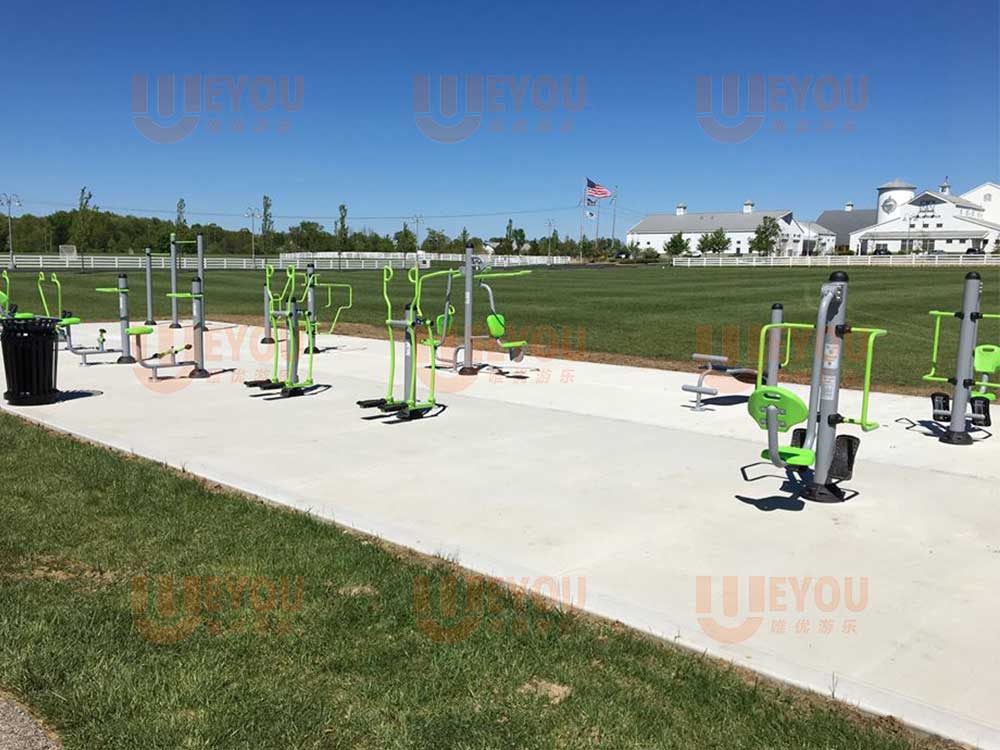

When discussing the service life of outdoor fitness equipment, it is important to distinguish between the main structural frame and wear-and-tear components, as they have very different lifespans.
1. Main Frame / Load-Bearing Steel Structure
The main structural frame is designed with a safe service life of approximately 8 years. Once this period has been reached, the equipment should, in principle, be removed from service and replaced to ensure user safety.
2. Wear-and-Tear Components
Components such as bearings, rotating shafts, pedals, rubber hand grips, springs, and other moving parts are consumable items with a much shorter service life than the main frame. These parts require regular inspection, maintenance, and replacement as needed, rather than waiting until the end of the 8-year service period.
Expected Service Life by Equipment Type
Dynamic Fitness Equipment,Examples include:
- Air Walker
- Waist Twister
- Exercise Bike
- Rowing Machine
- Sky Stepper
These products contain moving parts that are subject to continuous friction. Under normal maintenance, wear components such as bearings and pivot shafts typically need to be replaced every 2–4 years. Without proper maintenance, problems such as looseness, unusual noise, excessive movement, or jamming may occur within 2–3 years, potentially creating safety hazards.
Static Fitness Equipment,examples include:
- Pull-Up Bars
- Parallel Bars
- Leg Press
- Sit-up Board
- Climbing Frame
Since these products have no rotating or moving parts, their primary source of wear is corrosion rather than mechanical friction. With proper maintenance, the steel structure can remain in good physical condition beyond 8 years. However, once the recommended service life has been reached, the equipment should undergo a professional safety inspection and structural assessment before any extension of service is considered. Continued use without evaluation is not recommended.
4 Key Factors That Affect Service Life
- Material Quality and Manufacturing Process:Equipment manufactured with hot-dip galvanized steel and electrostatic powder coating offers significantly better corrosion resistance than ordinary painted steel. In coastal, humid, or high-salt environments, corrosion occurs much more rapidly, reducing the equipment’s service life.
- Installation Quality:Proper in-ground installation with reinforced concrete foundations provides much greater stability than simple expansion bolt installation, helping prevent posts from loosening or tilting over time.
- Usage Frequency:Equipment installed in residential communities, schools, and high-traffic public spaces** experiences more frequent use and faster wear than equipment located in lower-traffic parks or recreational areas.
- Routine Maintenance:Regular maintenance—including tightening bolts, lubricating moving parts, removing rust, and repairing damaged coatings—can significantly extend the equipment’s safe operating life and reduce long-term maintenance costs.