

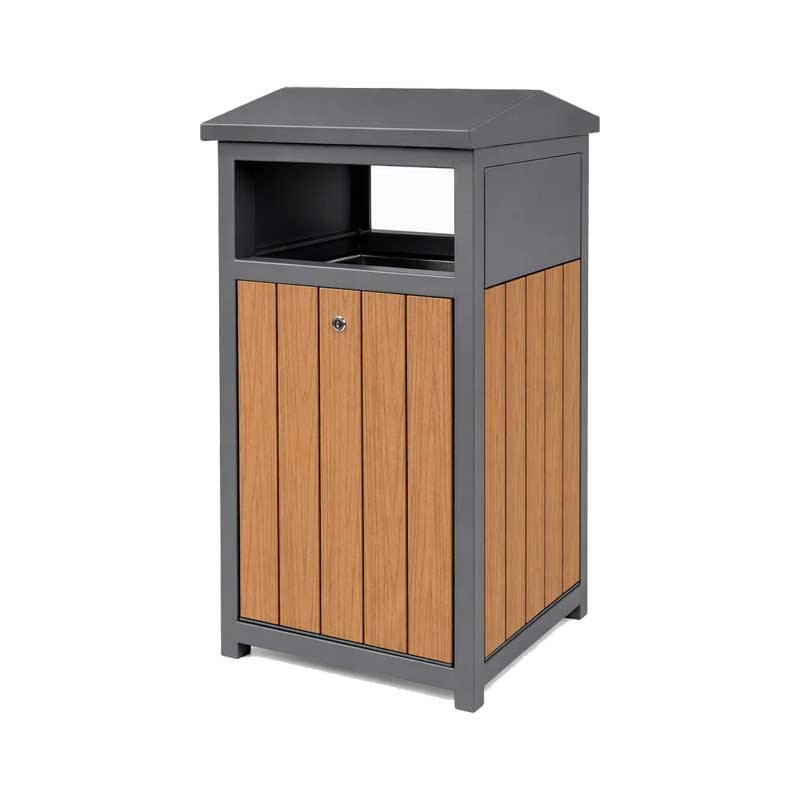
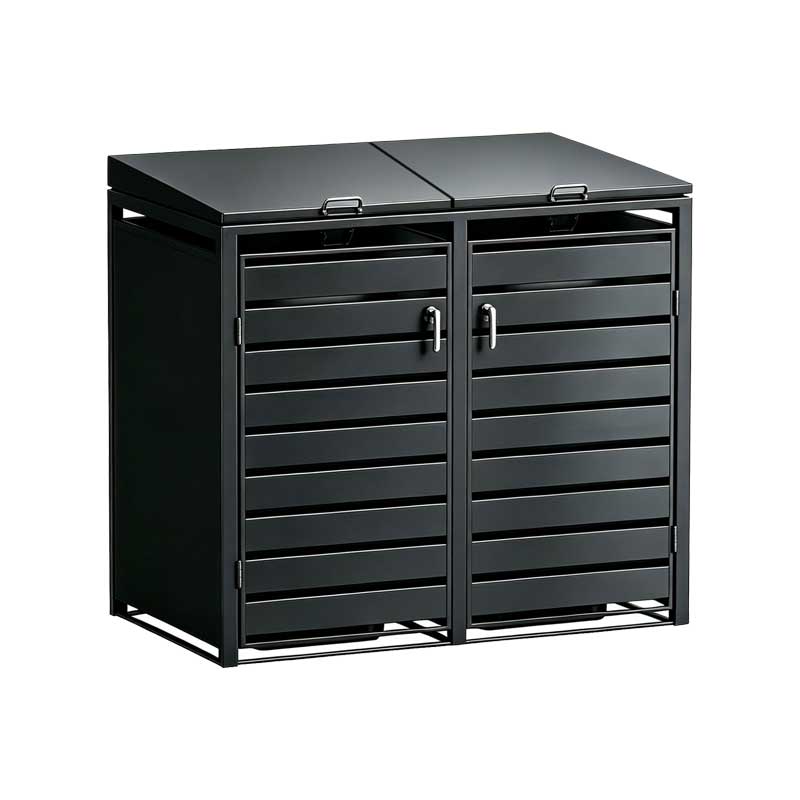
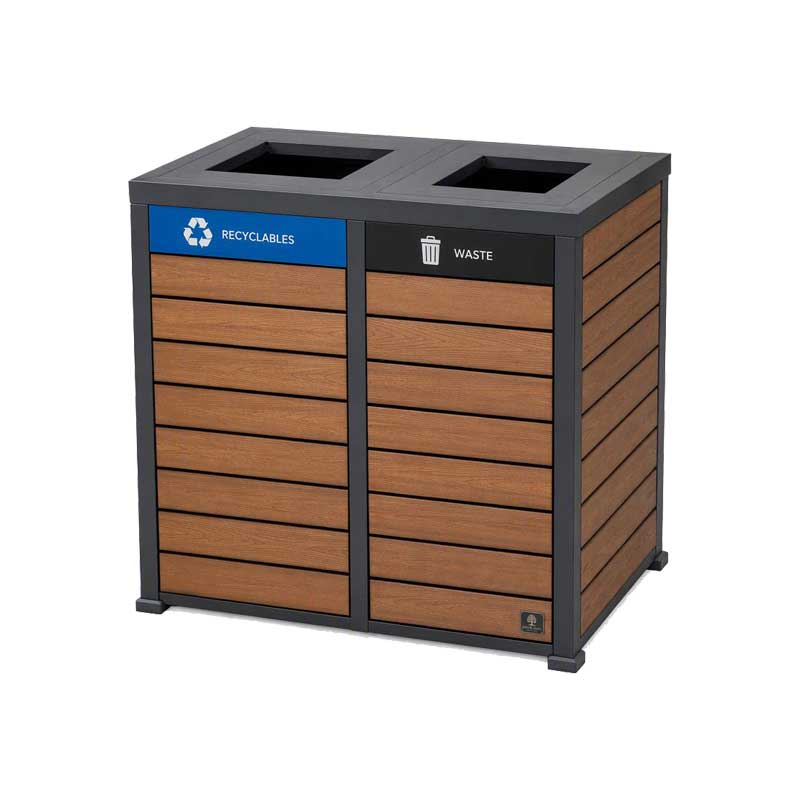
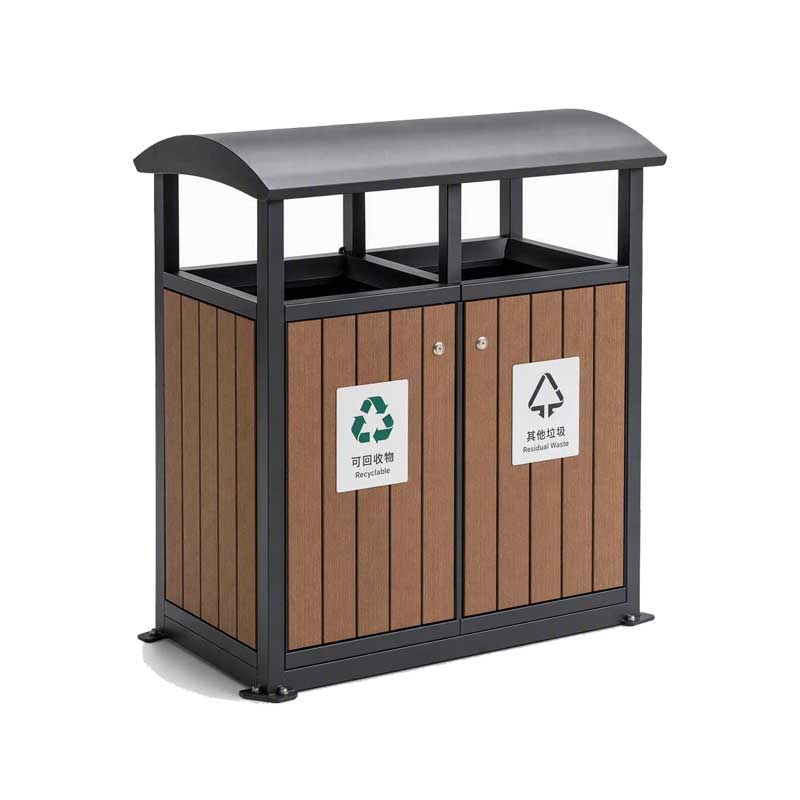
Outdoor trash cans are an essential part of park and landscape infrastructure. They not only help maintain environmental cleanliness but also contribute to the overall appearance of public spaces. Choosing the right outdoor trash can based on the specific application can improve functionality and help reduce long-term maintenance costs. However, many people are unsure how to select the most suitable outdoor trash can. Below, we will explain how to choose the right outdoor trash can from different perspectives.
1. Choose According to the Location and Usage Environment
When selecting outdoor trash cans for parks, the first consideration should be the level of pedestrian traffic and the local climate.
High-traffic areas such as main walkways, plazas, entrances, and exits are better suited to large-capacity outdoor trash cans with sturdy construction and anti-movement or anchoring features. For garden paths, wooded trails, and landscaped areas, medium- or small-capacity models with a simple and attractive design can provide a good balance between practicality and aesthetics.
For lakeside areas and regions with high humidity or frequent rainfall, choose materials with good moisture and corrosion resistance. For outdoor areas exposed to strong sunlight, UV resistance and color retention are particularly important.
For areas around children’s playgrounds, outdoor trash cans should feature rounded corners, smooth surfaces, and stable anti-tipping designs to improve safety during daily use.
2. Choose the Right Material
Material is one of the most important factors affecting the durability, appearance, and overall value of an outdoor trash can. Different materials are suitable for different park and landscape environments.
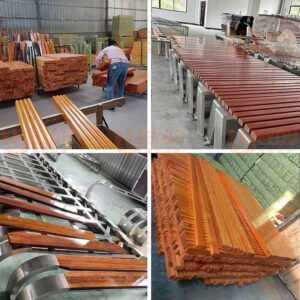
WPC (Wood-Plastic Composite) offers an excellent overall combination of performance and appearance. Its realistic wood-grain texture blends naturally with landscape environments, while its resistance to water, moisture, mold, cracking, and rot makes it suitable for most parks, gardens, and coastal or humid areas. WPC also requires very little maintenance.
Preservative-treated wood provides a natural appearance and relatively low initial cost. However, it is more suitable for dry environments and requires regular maintenance, such as applying wood oil or protective coatings.
Fiberglass (FRP) offers flexible shapes, lightweight construction, and excellent corrosion resistance. It can be used in special landscape areas where unique decorative designs are required. However, its impact resistance may be lower than that of metal materials.
304 stainless steel is strong, corrosion-resistant, and highly resistant to vandalism, making it suitable for high-traffic areas such as plazas, entrances, and public facilities. However, its metallic appearance may not blend as naturally with traditional landscape environments, and its cost is relatively high.
Cast aluminum provides a premium appearance combined with good weather resistance and durability. It is often used at key landscape nodes in high-end parks and scenic areas, but may not be the most economical choice for large-scale installation.
By comparison, ordinary solid wood and thin sheet metal are more susceptible to outdoor deterioration, corrosion, or physical damage and are generally less suitable for long-term outdoor use.
3. Consider Structure, Capacity, and Layout
A well-designed structure, reasonable placement, and an appropriate budget are also important when selecting outdoor trash cans.
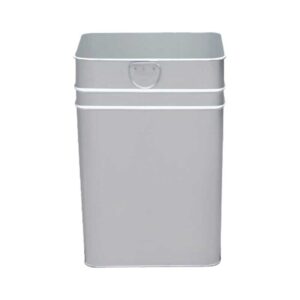
A high-quality outdoor trash can should ideally be equipped with a stainless steel or galvanized inner liner and a rain-protection lid. These features make the trash can easier to clean and empty while helping prevent rainwater from entering the container and reducing unpleasant odors.
The overall design should have no sharp edges or exposed hazardous corners. A fixed base or anchoring system can also be added to improve wind resistance and prevent tipping or unauthorized movement.
Capacity and placement should be adjusted according to the actual usage requirements:
60–100 L large-capacity trash cans are suitable for high-traffic areas.
30–60 L medium- and small-capacity trash cans are suitable for walking paths, landscaped areas, and greenbelts.
Along major park roads, trash cans can be placed approximately every 30–50 meters, depending on actual pedestrian flow and local management requirements.
Along forest or garden paths, a spacing of approximately 80–100 meters can be considered.
In viewing and rest areas, trash cans should be placed conveniently near seating and other gathering points.
These spacing recommendations should be adjusted according to actual visitor volume, waste generation, park layout, and local waste-management requirements.
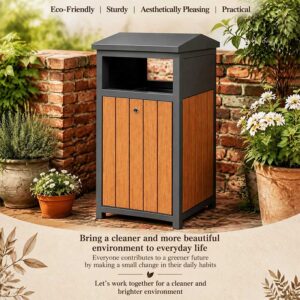
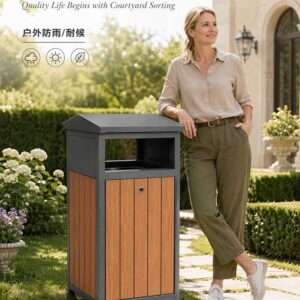
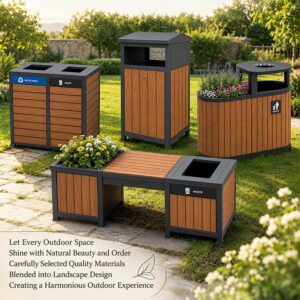
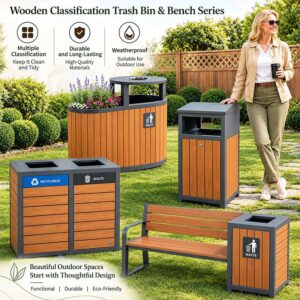
WPC outdoor trash can is an excellent material that offers a natural appearance along with excellent resistance to moisture and corrosion.
1. Weather-Resistant and Durable for Outdoor Use
WPC combines the advantages of plastic and wood fibers, offering excellent resistance to water, moisture, mold, and rot. It performs well in rainy and humid environments and is not easily affected by rain or prolonged exposure to moisture. With good UV resistance, WPC is also less likely to fade, crack, or deform under long-term sunlight, making it suitable for lakeside parks, coastal areas, and regions with frequent rainfall.
2. Natural Wood-Like Appearance
WPC features a realistic wood-grain texture and natural appearance that closely resembles real wood. Its warm and natural look blends well with parks, scenic areas, gardens, and other landscaped environments, creating a softer visual effect compared with traditional metal trash cans.
3. Easy to Maintain
Unlike preservative-treated wood, WPC does not require regular wood oiling, painting, or other routine maintenance. Daily dirt and stains can usually be removed simply by wiping the surface with clean water or a soft cloth. This helps reduce long-term maintenance requirements and operating costs.
4. Stable Physical Performance
WPC is resistant to cracking, insect damage, and significant expansion or shrinkage. It offers good toughness and durability and can withstand everyday impacts better than many fiberglass products, making it suitable for busy public outdoor areas.
5. Eco-Friendly and Safe
WPC is commonly manufactured using recycled plastic and wood fibers, and the material itself can be recycled. It does not produce wood splinters, and properly finished edges and corners provide a safer surface for public use. This makes WPC a suitable material for parks, landscape areas, schools, and other public spaces.
6. Easy to Process and Customize
WPC can be easily cut, drilled, and processed into different sizes and designs. Outdoor trash bins can be customized according to project requirements, including dimensions, colors, configurations, and styles. WPC panels or slats can also be combined with galvanized steel or stainless steel inner liners, making assembly and installation convenient.