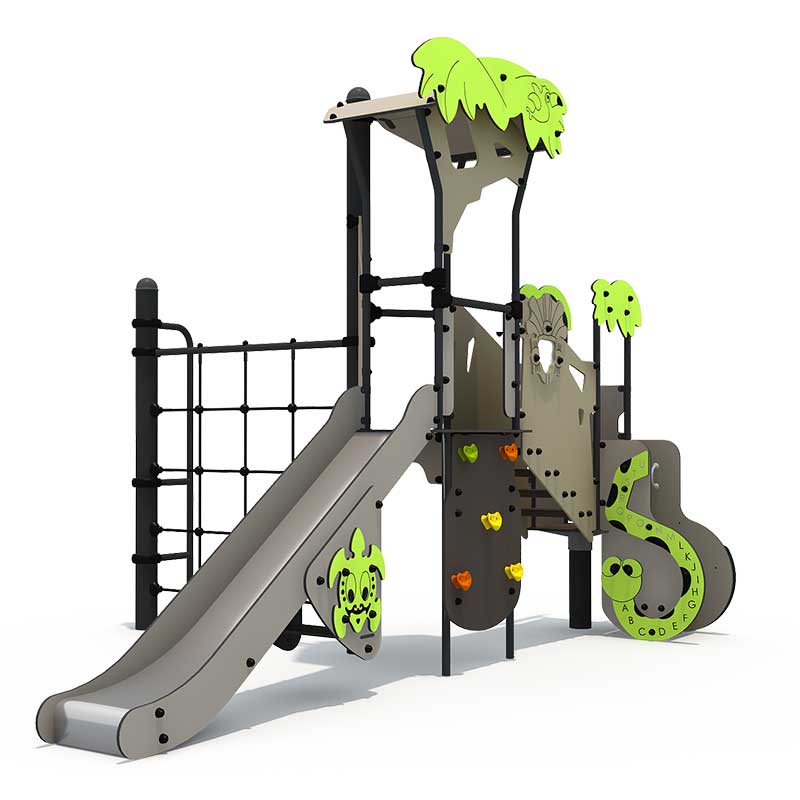
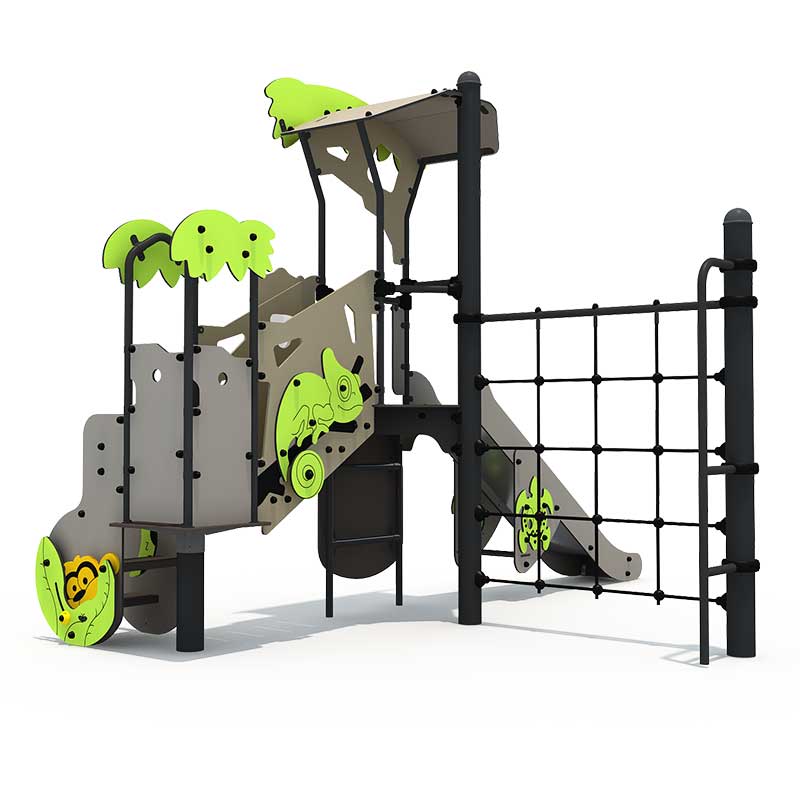
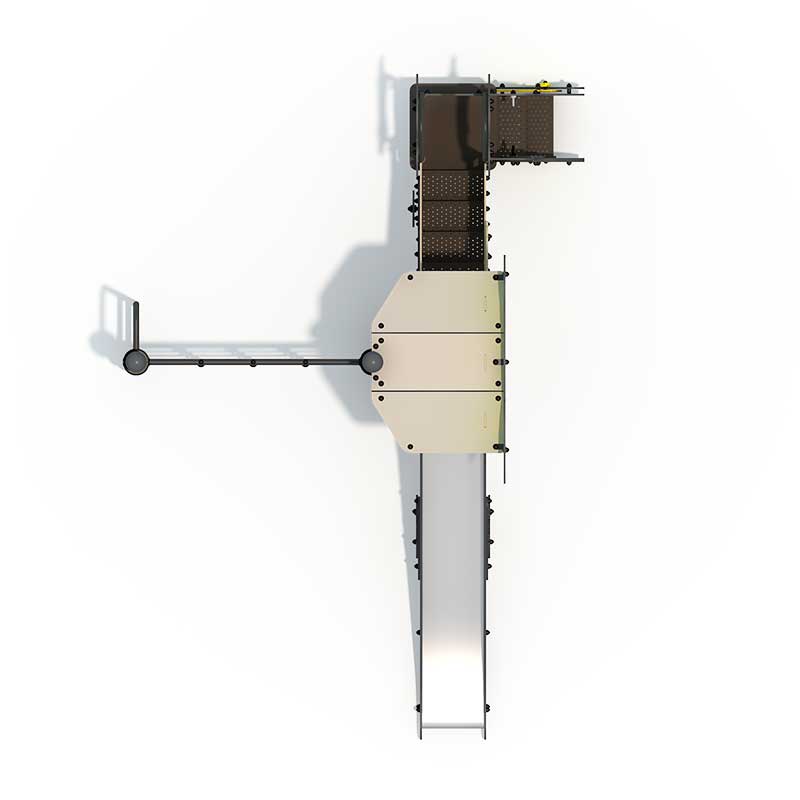
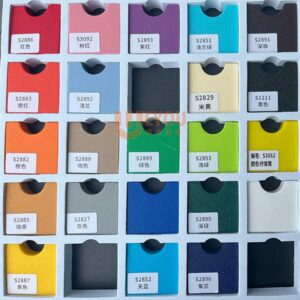
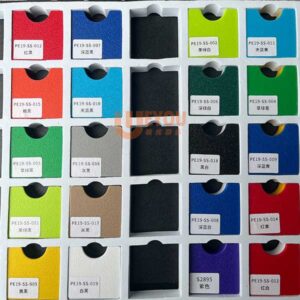
We can offer a variety of color combinations, and different combinations will create different visual effects, making the overall design more attractive.
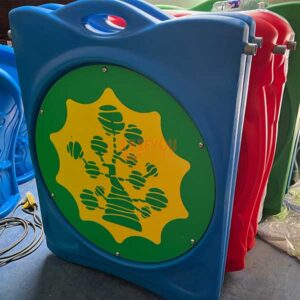
In general, the thickness of a single-color HDPE panel is 15mm, while a double-color HDPE panel is 19mm. The double-color panel includes an additional inner color layer. Based on the design rendering, we will determine which parts should use single-color panels and which should use double-color panels to achieve the best visual result.
We can also customize specific colors according to your requirements. However, please note that custom colors will lead to a longer lead time and higher cost, as additional production time is required for customization.
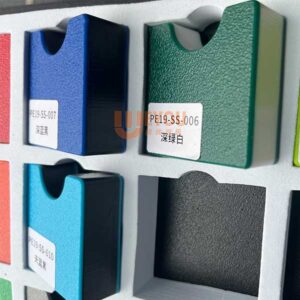
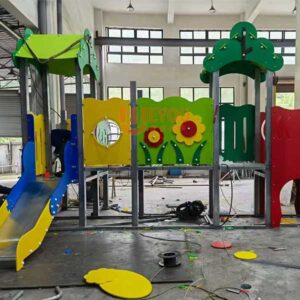
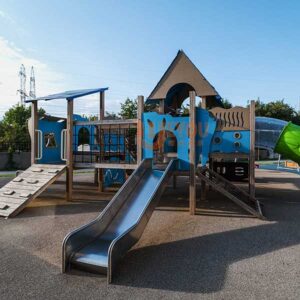
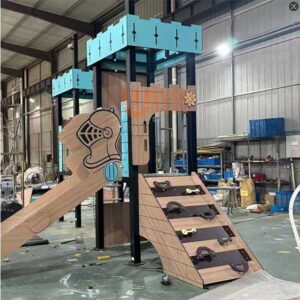
What are the differences or advantages in performance between PE (HDPE) outdoor playground structures and traditional plastic (LLDPE/engineering plastic) outdoor playground structures? PE sheet playground structures are more durable, safer, and more UV-resistant, making them suitable for long-term outdoor projects (government, schools, parks). Below are the key differences between them. However, HDPE is only used for panels or platforms in outdoor playgrounds; it cannot be used for slides. Slides are typically made of either plastic or stainless steel.
1. Material and Structural Differences (Fundamental Distinctions)
PE panels feature a “solid panel structure” with a thickness of 15–19 mm, whereas plastic panels are rotomolded and have a thickness of only 5–7 mm.
2. Durability
High impact resistance (less prone to cracking); does not age and become brittle like plastic; service life: over 10 years
3. UV Resistance (Outdoor Performance)
HDPE offers strong UV resistance; resists fading; surface does not chalk or discolor
4. Safety
More robust structure (steel frame support); less prone to deformation; edges can be rounded
5. Customization
Customizable designs (logos, IP characters, educational content), flexible sizing, and can be made into play panels
We carefully select premium-grade 304 stainless steel sheets as our slide, known for their outstanding corrosion resistance, abrasion resistance, and structural stability. These materials are specifically engineered for outdoor environments, effectively resisting rust, deformation, and performance degradation even under long-term exposure to rain, humidity, salt air, and temperature changes.
Safety & Certifications
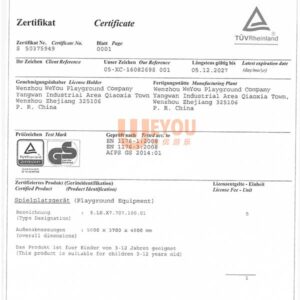
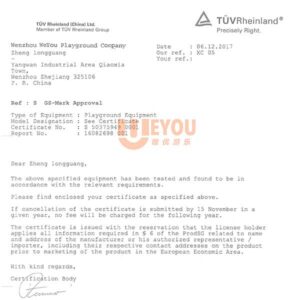
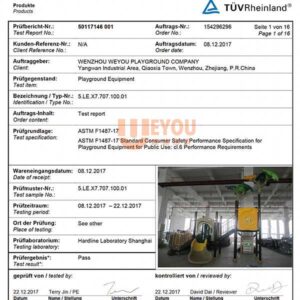
GS Certificate Issued by TUV SUD
WeYou playgrounds are designed and manufactured in compliance with European Norm (EN1176-1:2008) so as to minimize the injury hazards during play, as we understand how critical it would be to the business of our customers.
Our outdoor slides are fully certified to meet international safety standards, including EN 1176 and related national requirements. Each product has passed rigorous testing for structural stability, anti-entrapment, and material safety, ensuring every play experience is both fun and secure.
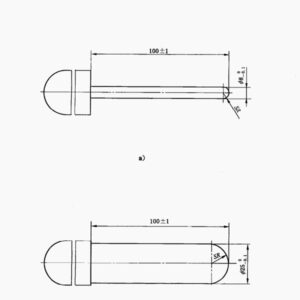
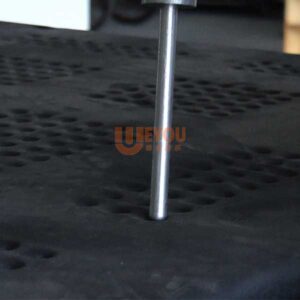
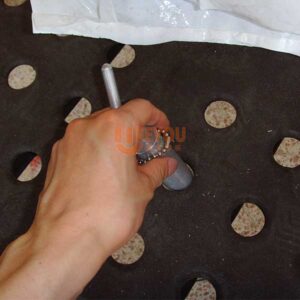
Finger Entrapment requirements
Small Finger Probe diameter:8 mm Big Finger Probe diameter:25 mm,the size should be less 8mm or more 25mm
Head and Neck Entrapment Standard
The equipment must not contain structures or openings that could cause a child’s head or neck to become entrapped. Pay particular attention to slide entrances, climbing platform railings, and the area where the chute edge connects to the handrail. All openings accessible to, climbable by, or probing by children must be tested for entrapment.
If a small probe can fit through the opening, but a large probe cannot, with an aperture range of 45 mm–230 mm, the equipment is considered to have a entrapment or neck entrapment hazard.
If both probes can fit through, or neither can fit through, with a safety aperture size of less than 45 mm or greater than 230 mm, the equipment is considered safe
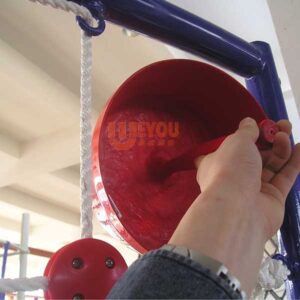
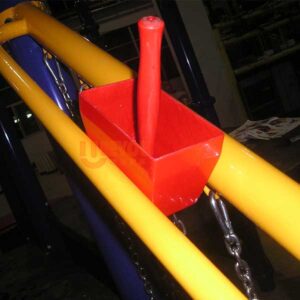
Entanglement Protection Requirements
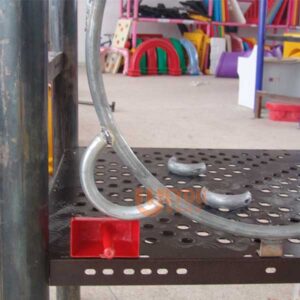
There shall be no structures that may cause entanglement of children’s clothing drawstrings, necklaces, hair, or similar items.
Typical inspection areas:
1.Slide handrails, connectors, and pipe joints:
Check for gaps or protruding bolts. Use smooth caps to maintain a rounded shape.
2.Openings in slide exit guardrails:
If the openings form circular holes with diameters between 8–25 mm, they should be closed off or modified to a non-circular shape.
3.Rope net connection ends:
Check for protruding metal connectors or knots. Protective sleeves should be added, or the protruding parts should be shortened.
4.Decorative accessories (such as connector, nut caps, etc.):
If they create spaces that could cause entanglement, they should be designed as enclosed or flexible structures.
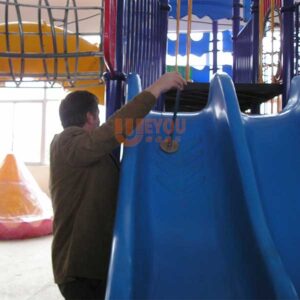
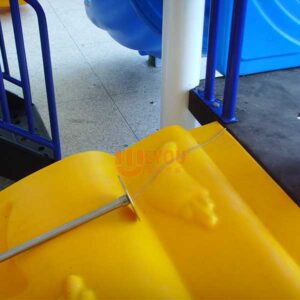
EN1176-3
For the slide start section or fence of the attached slide to extend onto the platform, the portion between the platform and the rung needs to meet the requirements of the platform.
Note 2: This requirement includes the height of the guardrail or fence.
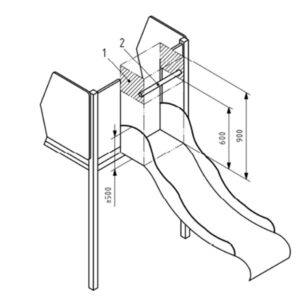
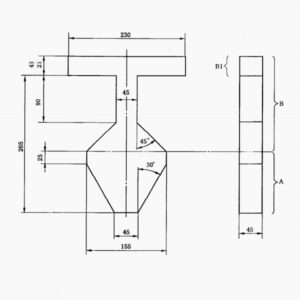

Illustration of the position of the slides
A slide start section (measured from the slide plane)
B Slide section (measured from the plane of the slide)
C slide exit section (measured from the slide plane)
Maximum inclination of the sliding segment
Maximum inclination of the starting segment 4.3 Starting segment
Note: See Figure 2 for the starting segment and the sliding segment.
4.3.1 Length and angle
The starting segment of each slide is at least 350 mm long and the downward angle of the starting segment is between 0 and 5 degrees (measured from the centerline of the starting segment)
Note: For ancillary slides, the platform can be used as a starting segment.
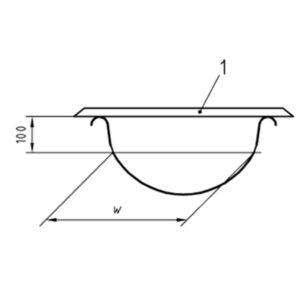
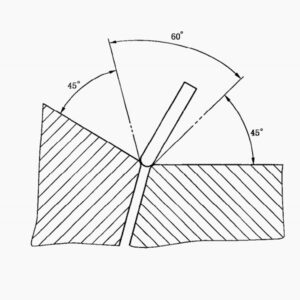
Sliding section width test
When testing according to Figures 3 and 5b) (wide slide), straight slide, without tunnel, when the sliding section exceeds 1500 mm, there should be a width requirement:
a) less than 700 mm
b) greater than 950 mm
For multi-track slides, each individual slide has a width of less than 700 mm.
When tested according to Figure 3, the width of the spiral slide and the curved slide (see Figure 4) should be less than 700 mm.
Our outdoor slides are designed and manufactured in strict accordance with international safety standards. Every component—from plastic parts to metal structures—undergoes thorough testing to ensure durability, stability, and child safety. You can trust that our products are built to provide a safe, reliable, and worry-free play experience.
Installation & Maintenance
We provide detailed assembly instructions to make sure that our customers could Install the playgrounds on their own.
We provide comprehensive instruction manuals for all our outdoor slides to ensure a safe, smooth, and enjoyable installation process.
Each manual includes:
Step-by-step assembly guidance, clearly illustrated to make installation straightforward for installers or end users.
Safety instructions, highlighting areas prone to entrapment, pinch points, or other potential hazards, to ensure childre’s play is always secure.
Maintenance tips and care recommendations, including how to inspect hardware, clean surfaces, and prolong the life of the slide.
Our goal is to provide not just a high-quality outdoor slide, but also all the support needed so that every setup is safe, durable, and worry-free for children and parents alike.
Detailed Manuals-Assembly Instructions (sample)
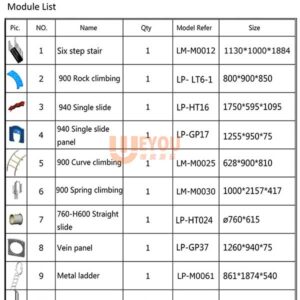
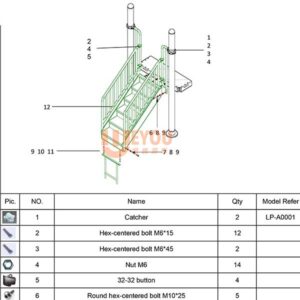
Our slides can be installed with either in-ground anchoring or expansion bolts on concrete. We provide detailed installation instructions, and our team can also offer on-site or remote installation support if needed.
If your grouond is concrete, we recommend choosing surface mount type, please ensure the concrete is 15cm thick. If the concrete is too thin, the expansion screws can crack or crumble under stress (especially upward pull and lateral rocking forces), rendering the anchor ineffective and potentially causing the slide to tip over.
If your ground is grass or sand, we recommend choosing inground type. This requires digging some 30-60cm deep pits and then pouring concrete to fix it when installing
both are very secure; it all depends on the type of floor you have.
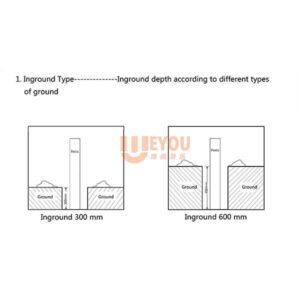
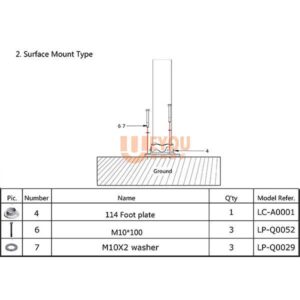
1.Inground type: lengthen the posts,for soft ground, like grass ground, choose inderground type
2. Surface mount type: for hard ground, like concrete, choose surface mount type
How to maintain HDPE outdoor playground equipment
1. Routine Cleaning
Clean the HDPE panels regularly using mild soap and water with a soft cloth or sponge. For larger areas, a low-pressure water rinse can be used. This helps remove dust, dirt, food residue, and other contaminants.
Avoid using abrasive brushes or strong chemicals, as they may damage the surface or affect the UV-resistant layer.
2. Regular Inspection
Inspect the equipment on a monthly basis to ensure safety and performance:
Check for cracks, deep scratches, or deformation on HDPE panels
Monitor any excessive color fading (normal slight fading may occur over time)
Ensure all bolts, nuts, and connectors are tight and secure
Check edges and corners to make sure there are no sharp points
3. Structural Safety Check
Conduct a more detailed inspection every 3 months:
Confirm all panels are firmly fixed and stable
Inspect metal parts (such as galvanized steel posts) for rust or loosening
Ensure safety areas and fall zones are clear of obstacles
Verify the structure complies with safety standards (e.g., fall height requirements)
4. Weather and Environmental Care
HDPE is highly durable and suitable for outdoor use, but basic care is recommended:
No special UV protection is required, though shading can reduce long-term fading
Ensure proper drainage to prevent water accumulation around the base.After extreme weather (heavy rain, strong wind, snow), check for any loosened or damaged parts
5. Repair and Replacement
Minor surface scratches do not affect performance and usually do not require repair.Replace panels if they are cracked, warped, or structurally damaged.Always use original or equivalent standard parts for replacement
Maintenance Schedule Recommendation
Cleaning: every 1–2 weeks
Basic inspection: monthly
Comprehensive safety check: every 3 months
Packaging & Shipping
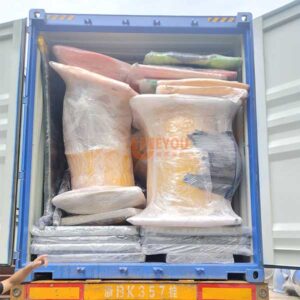
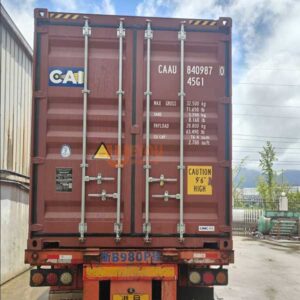
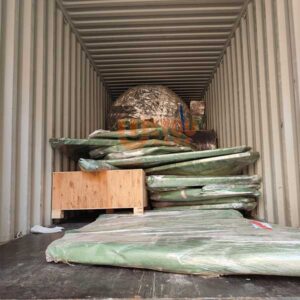
Professional loaders are responsible for loading the containers, ensuring that each piece of cargo is loaded into the container in the safest and most efficient way.
Our experienced team carefully plans the layout, stacking, and protection of each part before sealing the containe。they also could part the irregular shaped parts in a compact way to save your shipping cost.
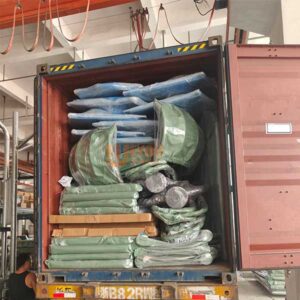
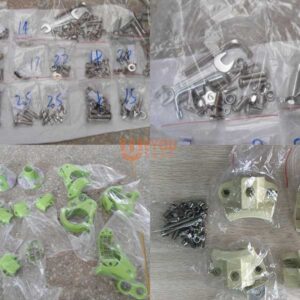
We also provide free installation tools. All accessories such as screws, nuts, and fasteners are well categorized and packed separately in bags, making it easy for you to find and install them efficiently.
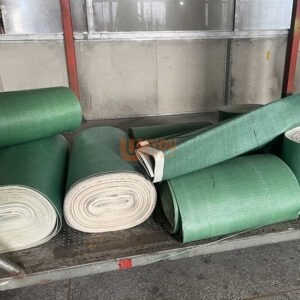
Strong Protection for Long-Distance Transport
Our protective film is made of woven fabric and EVA foam, which is tough, wear-resistant, and waterproof. The bottom is thickened with EVA to prevent scratches and wear during transportation.
It is environmentally friendly and can be laid on the ground to protect the floor when the house is renovated. It can be reused.
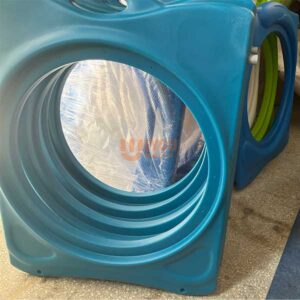
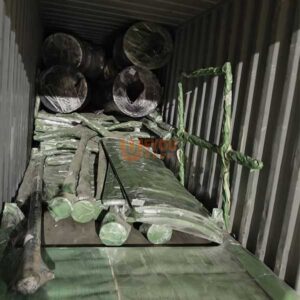
All components are carefully wrapped with multiple protective layers — including EVA foam, PE plastic wrapping and pp film
This ensures every metal post and plastic part stays intact during long-distance sea and land transportation.
This advanced packaging method provides superior cushioning, scratch resistance, and moisture protection during long-distance transportation
Scratch Protection
Each plastic part is first wrapped with bubble film and then covered with a PP film layer.
This double-layer protection prevents scratches, moisture, and dust, while keeping the parts clean and safe during transport and storage
The double-layer packaging method of “bubble film + PP film” ensures that plastic parts maintain a smooth surface, no scratches, deformation, and moisture during long-distance sea transportation or storage, and the overall protection performance is improved by about 30%-40%.
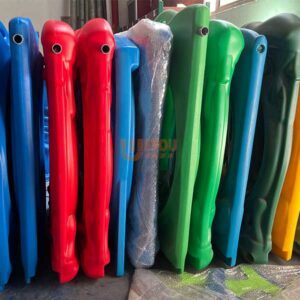
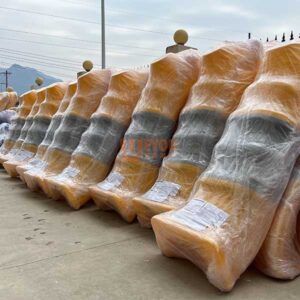
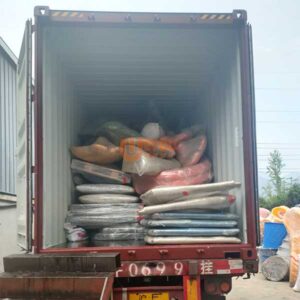
Our product packaging is good quality, ensuring that each product is securely protected during transit. We use durable materials and carefully designed packaging to prevent any damage, ensuring that the products arrive in perfect condition for our customers.
FAQ
1. What is HDPE material?
HDPE (High-Density Polyethylene) is a durable, non-toxic plastic widely used in outdoor playground equipment. It is known for its excellent strength, impact resistance, and weather durability.
2. Is HDPE safe for children?
Yes, HDPE is completely safe for children. It is non-toxic, odorless, and does not contain harmful substances. The surface is smooth with rounded edges, reducing the risk of injury.
3. Can HDPE playground equipment be used outdoors?
Yes, HDPE is specifically designed for outdoor use. It is UV-resistant, waterproof, and can withstand various weather conditions such as sun, rain, and humidity.
4. Will the color fade over time?
HDPE panels are UV-stabilized, so fading is minimal. Slight color change may occur after long-term exposure to sunlight, but it does not affect performance or safety.
5. Does HDPE crack or break easily?
No, HDPE has high impact resistance and flexibility. It does not easily crack or become brittle, even under heavy use or changing temperatures.
6. Does HDPE absorb water or rot like wood?
No, HDPE is completely non-absorbent. It will not swell, rot, or develop mold, making it much more durable than wooden materials.