
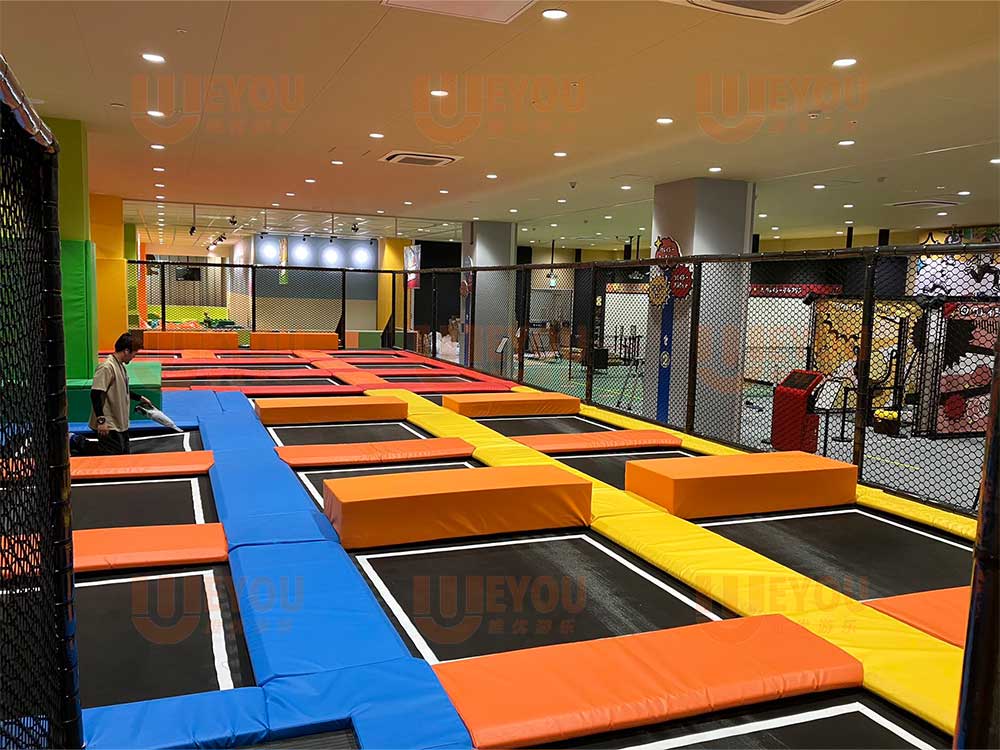
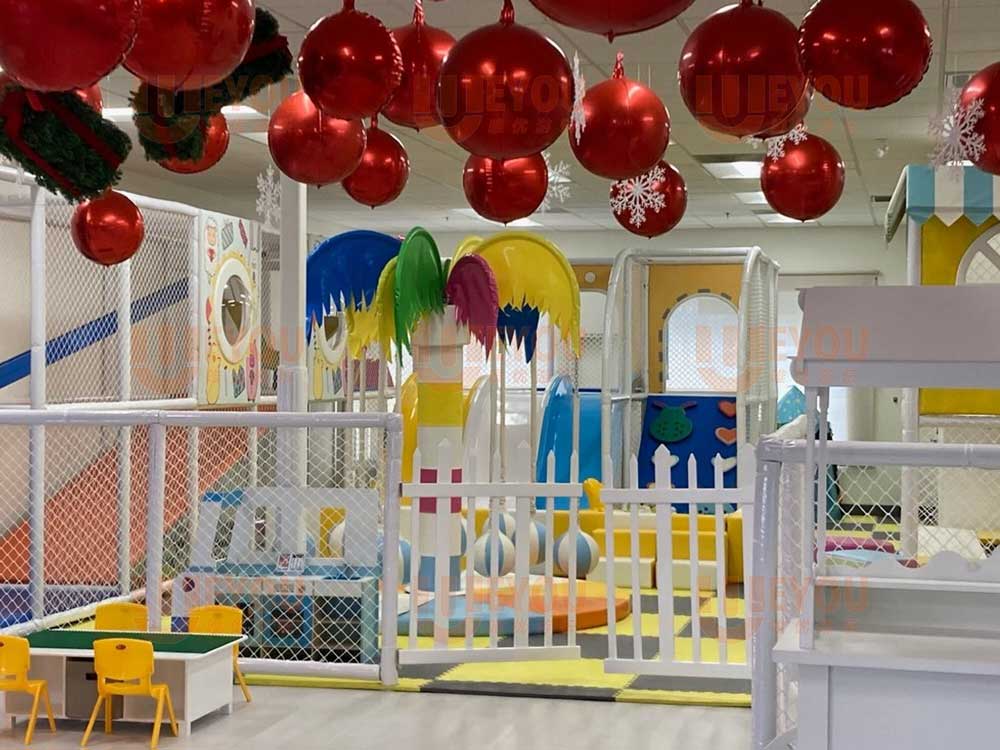
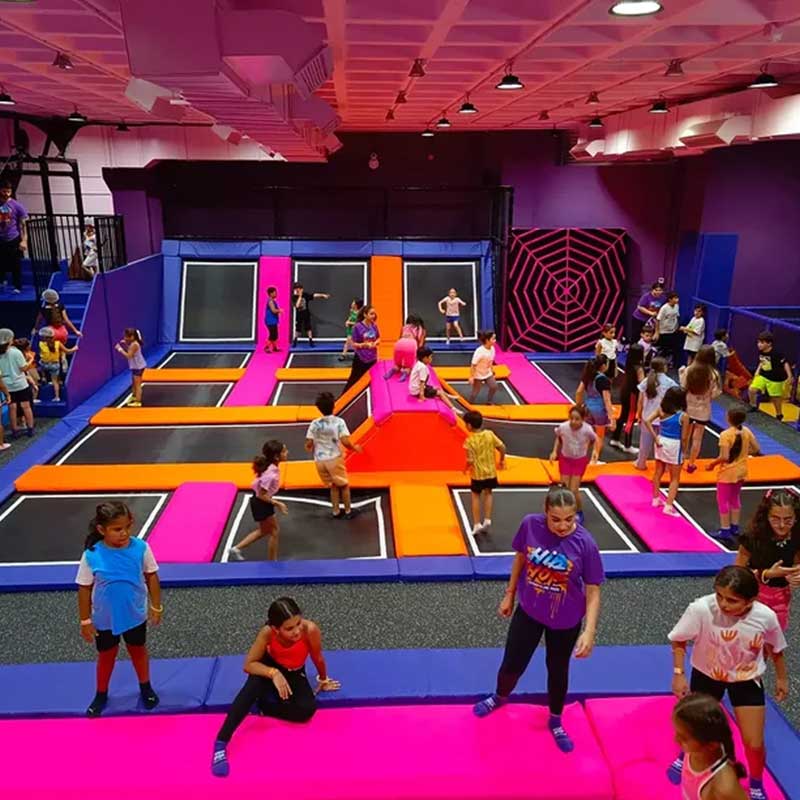

If you’re wondering how to start an indoor playground business, you’ve come to the right place. This guide explains how to open an indoor playground, including business planning, location selection, equipment costs, licensing, installation, marketing, and daily operations.
An indoor playground, also known as a soft play center, children’s indoor playground, or indoor play center, is a specially designed indoor recreational facility for children aged 2 to 12 years old. It provides a safe, fun, and engaging environment where children can explore, play, and develop essential physical and social skills.
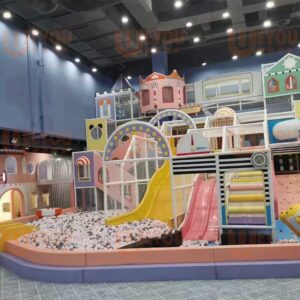
Indoor playgrounds combine children’s favorite activities—climbing, crawling, sliding, jumping, balancing, rolling, and exploring—into a multi-level play structure built with soft, impact-absorbing materials to maximize safety.
Unlike outdoor playgrounds, indoor playgrounds are not affected by weather conditions such as rain, snow, strong winds, or extreme temperatures. This allows operators to stay open year-round and provides families with a reliable destination for children’s entertainment regardless of the season.
Indoor playgrounds are commonly located in:
- Shopping malls
- Retail centers
- Supermarkets
- Family entertainment centers
- Community commercial buildings
- Early education centers
- Daycare and childcare facilities
Today, indoor playgrounds have become one of the most popular family entertainment businesses, offering children a safe place to play while giving parents a comfortable environment to relax.
- Top 5 benefits of indoor playgrounds
- Indoor playground market analysis
- How to research your local indoor playground market?
- What size indoor playground should I start with?
- How to choose the best location for an indoor playground?
- What licenses and permits do you need to open an indoor playground?
- How to plan and design a indoor playground?
- How to buy indoor playground equipment?
- How much does it cost to open an indoor playground?
- How much does indoor playground equipment cost?
- Is an indoor playground profitable?
- How long does it take to manufacture an indoor playground?
- How long does shipping take?
- How to install indoor playground equipment?
- How long does it take to install an indoor playground?
- How to operate an indoor playground?
- How to market an indoor playground effectively?
- How to maintain indoor playground equipment?
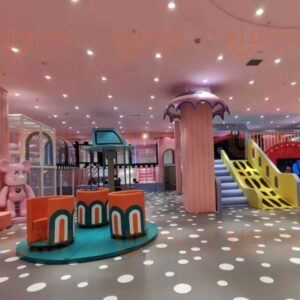
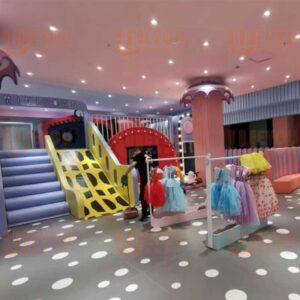
1. Top 5 benefits of indoor playgrounds
1.1 Operate Year-Round Regardless of the Weather
One of the biggest advantages of an indoor playground is that it can operate 365 days a year.Because it is located in a climate-controlled indoor environment, business is not affected by: rain,snow,strong winds,extreme heat,cold weather,compared with outdoor playgrounds, indoor playgrounds experience fewer seasonal fluctuations, providing a more stable and predictable source of revenue throughout the year.
1.2. Safer than many other children’s entertainment facilities
Safety is one of the main reasons parents choose indoor playgrounds.Modern indoor playground equipment is manufactured with: soft padded structures ,safety netting,foam protection rounded edges, non-slip surfaces compared with outdoor playgrounds or large trampoline parks, the risk of serious injuries from falls or collisions is generally lower. With regular inspections, proper maintenance, and public liability insurance, operators can effectively manage operational risks while creating a safe play environment for children.
1.3. Easy to operate with low management requirements
Indoor playgrounds are relatively simple to manage. Most play elements do not require electricity or complicated mechanical systems. Children power the activities themselves through climbing, sliding, crawling, and exploring. As a result, operators benefit from: lower maintenance costs, fewer technical issues,no need for specialized maintenance staff,Simple daily inspections and cleaning routines. Many small and medium-sized indoor playgrounds can be successfully managed by a family or a small team after receiving basic operational training.
1.4. Healthy cash flow with no inventory pressure
Unlike retail stores or restaurants, indoor playgrounds do not require large inventories of products. Revenue primarily comes from: admission tickets, membership cards, prepaid packages, Prepaid memberships can generate immediate cash flow, helping recover equipment and renovation costs more quickly. Since there is little or no inventory to manage, operators also reduce storage costs, waste, and inventory-related financial risks.
1.5. Multiple revenue streams beyond admission tickets
Successful indoor playgrounds earn revenue from much more than daily admission fees. Additional income opportunities include: monthly and annual memberships, birthday party packages, private venue rentals,after-school childcare programs,arts and crafts workshops, children’s retail products, snacks and beverages, holiday camps and special events.By offering multiple services, operators can increase customer spending, improve repeat visits, and create a more stable and profitable business throughout the year.
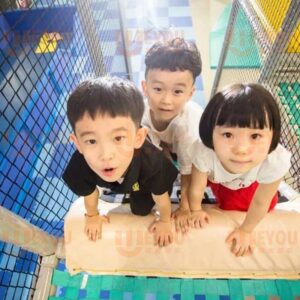
2. Indoor playground market analysis
A Promising Market with Long-Term Growth Potential
The indoor playground industry continues to experience steady growth as families place greater emphasis on children’s health, education, and recreational activities. Rising disposable incomes, urbanization, and the increasing demand for safe indoor entertainment have made indoor playgrounds one of the fastest-growing sectors in the family entertainment industry.
Unlike businesses that rely solely on admission tickets, a successful indoor playground generates revenue from three primary sources:
- Walk-in admission tickets
- Membership and prepaid cards
- Value-added services
Additional services such as birthday parties, arts and crafts workshops, cafés, toy retail, and seasonal events can significantly increase customer spending and improve overall profitability. Diversified revenue streams also help shorten the investment payback period.
A Stable Business with Predictable Cash Flow
Indoor playgrounds are widely regarded as a low-inventory, cash-flow-friendly business model.
Unlike restaurants or retail stores, operators do not need to maintain large inventories of products. Most income comes from admissions, memberships, and prepaid packages, providing a stable and predictable cash flow while reducing inventory-related risks.
As a result, indoor playgrounds have become an attractive business opportunity for entrepreneurs seeking a relatively low-risk investment with recurring revenue.
Strong Growth Opportunities in Emerging Markets
While the industry continues to grow, its development is becoming more mature.
The days of relying solely on large play structures or competing with low prices are gradually coming to an end. Today’s successful indoor playgrounds focus on delivering a better customer experience, higher service quality, and stronger operational management.
For new investors, significant opportunities still exist in:
- Growing residential communities
- Small and medium-sized cities
- Developing suburban areas
- Family-oriented commercial centers
These markets often have lower competition, lower rental costs, and increasing demand from young families.
Keys to Long-Term Success
To build a profitable and sustainable indoor playground business, operators should focus on four key factors:
Choosing a location with a high concentration of families and children
Maintaining excellent hygiene and safety standards
Offering multiple value-added services beyond admission tickets
Building a strong membership program through both online and offline marketing
Rather than entering highly saturated shopping districts, many successful operators achieve better returns by opening their playgrounds in large, well-established residential communities where customer loyalty and repeat visits are easier to develop.
An Ideal Business for First-Time Entrepreneurs
Indoor playgrounds are well suited for first-time business owners due to their flexible investment levels and relatively simple day-to-day operations.
Many small and medium-sized facilities can be managed by a family or a small team after basic training. With stable customer demand, recurring membership income, and multiple revenue streams, indoor playgrounds offer a balanced combination of manageable risk, sustainable profitability, and reasonable return on investment.
For entrepreneurs looking to enter the family entertainment industry, an indoor playground remains one of the most attractive and scalable business opportunities available today.
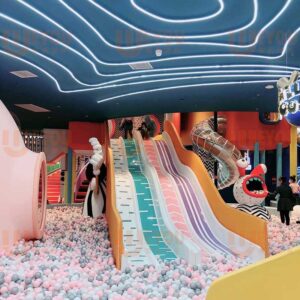
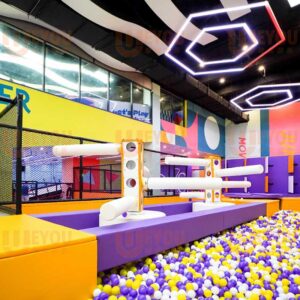
3. How to research your local market before opening an indoor playground
Conducting thorough market research is one of the most important steps before investing in an indoor playground. A well-researched market can help you choose the right location, identify your target customers, and reduce the risk of opening in an area with insufficient demand.
Instead of focusing only on competitors, you should evaluate the overall market potential by analyzing local demographics, family spending habits, and existing entertainment options.
3.1. Analyze the Local Population
Start by understanding the families who live within your target area.
Consider questions such as:
- How many children aged 2–12 live nearby?
- Are there many young families?
- Is the local population growing?
- Are there schools, daycare centers, or residential communities nearby?
A location with a high concentration of families generally offers greater long-term business potential.
3.2. Evaluate the Competition
Visit other indoor playgrounds within a reasonable driving distance (typically 30–100 km, depending on your market).
Pay attention to:
- Their playground size
- Types of play equipment
- Facility cleanliness
- Customer service
- Peak and off-peak visitor traffic
- Overall customer experience
The goal is not to copy your competitors but to understand what they do well and identify opportunities to offer something different.
3.3. Study Pricing and Revenue Models
Understanding how competitors generate revenue will help you build your own pricing strategy. Check whether they offer:
- Single-entry tickets
- Membership cards
- Monthly or annual passes
- Birthday party packages
- Group discounts
- Food and beverage services
- Retail products
Comparing different pricing models will help you determine a competitive yet profitable pricing structure.
3.4. Identify Your Target Customers
Observe who is actually using the playground. Ask yourself:
- What are the most common age groups?
- Are most visitors toddlers, preschoolers, or school-age children?
- Do families stay for one hour or several hours?
- Are parents interested in memberships or one-time visits?
Understanding customer behavior will help you design attractions that better match local demand.
3.5. Discover Market Gaps
Rather than competing directly with existing businesses, look for unmet needs in your local market. For example:
- Is there no dedicated toddler play area?
- Are birthday party services limited?
- Do existing playgrounds lack interactive or educational attractions?
- Are facilities outdated or poorly maintained?
Finding these gaps allows you to create a unique value proposition that attracts more customers.
Key Questions to Answer During Your Research
- How many indoor playgrounds already operate in the area?
- Who are your biggest competitors?
- What are their ticket prices and membership plans?
- Which attractions are most popular?
- What age groups do they mainly serve?
- How busy are they on weekdays and weekends?
- What can you do differently to stand out?
By conducting detailed market research before making your investment, you’ll be in a much stronger position to choose the right location, develop a competitive business strategy, and build a successful indoor playground with long-term growth potential.
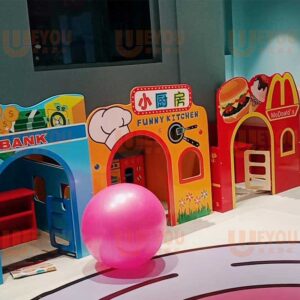
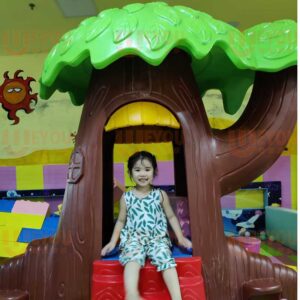
4. What size indoor playground should I start with?
Choosing the right size is one of the most important decisions when opening an indoor playground. Your budget, target customers, location, and business goals should all be considered before deciding on the size of your facility.
For most first-time investors, an indoor playground between 80㎡ and 150㎡ offers the best balance between investment, operating costs, and profitability.
Small Indoor Playground (50㎡ / 538 ft²)
A small indoor playground is suitable as a supporting attraction rather than a standalone business.
Typical applications include:Baby and maternity stores,supermarkets,early education centers,daycare facilities
small shops in towns or residential communities.
Most investors choose this size with a limited budget of $15,000–$30,000 to test the market or attract additional customers to an existing business.
During weekends and holidays, the playground can become crowded, reducing the overall customer experience.
Pros: Low startup investment,low rent and operating costs,quick and easy to installIdeal as a customer attraction for existing businesses
Cons:Limited play capacity,crowded during peak hours,difficult to introduce high-profit services such as birthday parties or childcare,lower membership conversion and repeat visit potential
Recommended For:
- Home
- Existing baby stores or early education centers
- Businesses looking to increase customer traffic
- Investors who want to test the market with a small investment
It is not recommended as a standalone indoor playground business for most first-time entrepreneurs.
Standard Indoor Playground (50–150㎡ / 538–1,615 ft²)
This is one of the most popular options for first-time investors.
Typical conditions include: moderate investment budget,residential communities with a high concentration of families,limited local competition,affordable rental costsFamily-operated businesses.
Many indoor playgrounds of this size can be successfully managed by a couple or a small team.
Pros: Lower investment than larger playgrounds,Lower rent and operating expenses,Easier to manage
Suitable for first-time business owners
Cons:Limited capacity during weekends and holidays,fewer opportunities for value-added services
limited space for future expansion,less competitive than larger playgrounds
Recommended For:
- First-time entrepreneurs
- Investors with limited budgets
- Family-operated businesses
- Community-based indoor playgrounds
For most new investors, an 80–150㎡ indoor playground offers the best balance between startup costs, operational simplicity, and long-term profitability. It provides enough space for attractive play equipment while keeping investment risk relatively low.
Large Indoor Playground (Over 150㎡ / 1,615 ft²)
A large indoor playground is ideal for investors with a higher budget who want to build a comprehensive family entertainment destination.These facilities are commonly located in: shopping malls,family entertainment centers (FECs),large commercial complexes,high-traffic retail centers.
This business model is best suited for investors with a startup budget of $60,000–$120,000+, the ability to hire and manage staff, and access to a large customer base with at least 2,000 children aged 2–12 living nearby.
Pros: Accommodates children from 1 to 12 years old with age-specific play zones,more attractions encourage families to stay longer and spend more,higher revenue potential through birthday parties, memberships, workshops, food and beverage sales, and retail
Cons: Higher rent and utility costs,larger investment in equipment and renovation,more employees required for daily operations,increased marketing and management expenses
Recommended For:
- Shopping mall operators
- Family entertainment brands
- Investors with previous business experience
- Entrepreneurs planning a long-term business with multiple revenue streams
If you have sufficient capital, a strong location, and an effective marketing strategy, a 150㎡+ indoor playground can generate higher customer spending, stronger brand recognition, and greater long-term profitability than a smaller facility.
Choosing the right playground size depends on your budget, business goals, operating experience, and target market.
Our Recommendation
For most first-time investors, an 80–150㎡ indoor playground offers the best balance of investment, profitability, and operational simplicity. It provides enough space for attractive play equipment, supports multiple income streams such as memberships and birthday parties, and keeps startup costs at a manageable level. A 50㎡ playground is best used as a supporting attraction rather than a standalone business, as its limited capacity and revenue opportunities make long-term growth more challenging. For experienced investors with sufficient capital, a 150㎡+ indoor playground can deliver higher revenue and stronger brand recognition, but it also requires a larger investment, more staff, and more sophisticated operations. In short, if your goal is to maximize return on investment while minimizing risk, an 80–150㎡ community-based indoor playground remains the most practical and proven choice for most new entrepreneurs.
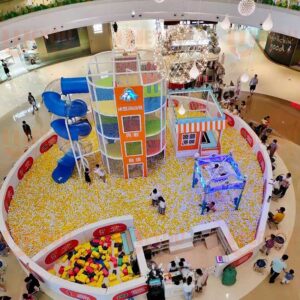
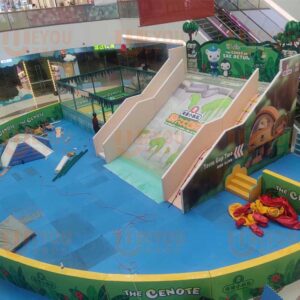
5. How to choose the best location for an indoor playground?
Choosing the right location is one of the most important factors in the success of an indoor playground. Even the best equipment and design cannot compensate for a poor location.
When selecting a site, prioritize areas with a high concentration of families, convenient access, and consistent foot traffic.
Ideal Locations
The most suitable locations for an indoor playground include:
- Shopping malls
- Department stores
- Large supermarkets and retail centers
- Established residential communities
- Family-oriented commercial complexes
These locations naturally attract parents and children, making it easier to generate consistent customer traffic.
Key Location Criteria,before signing a lease, evaluate the following factors:
Family Population,for a small indoor playground (under 100㎡), the surrounding 500-meter (0.3-mile) radius should ideally include at least 300 families with young children.
For community-based playgrounds, the primary service area should contain more than 3,000 children aged 2–12 within a 3-kilometer (1.9-mile) radius. A larger target population provides a stronger customer base and supports long-term business growth.
Complementary Businesses
Look for locations near businesses that attract the same target customers, such as:baby and maternity stores,children’s clothing stores,toy stores,family restaurants,early education centers,daycare facilities.
These complementary businesses create a natural “family traffic flow,” increasing the likelihood that parents will visit your indoor playground during the same trip.Accessibility and Parking
Your location should also offer:
- Convenient parking
- Easy pedestrian access
- High visibility
Safe entrances for families with young children,the easier it is for parents to reach your playground, the more likely they are to become repeat customers.
Recommended Location for First-Time Investors
For entrepreneurs opening their first indoor playground, we recommend choosing a 100–300㎡ (1,076–3,229 ft²) location in a large, established residential community.
Compared with shopping malls, community locations typically offer:
- Lower rental costs
- Lower labor expenses
- A stable base of local families
- Higher repeat visitation
- Easier membership development
This business model requires a lower initial investment while providing a steady customer base, making it one of the most practical and profitable options for first-time indoor playground operators.
Pro Tip: Don’t choose a location based on rent alone. A site with slightly higher rent but stronger family traffic and better visibility often generates significantly more revenue than a cheaper location with limited customer demand. The best locations are those where families already spend time and can easily include your indoor playground as part of their regular routine.
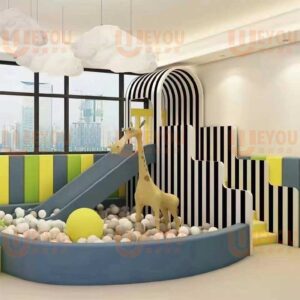
6. What licenses and permits do you need to open an indoor playground?
Before opening an indoor playground, you must obtain the required licenses and permits to operate legally. The exact requirements vary by country and region, but most indoor playground businesses need several basic registrations and safety approvals. Below are the most common permits. If you plan to open your business in China, these are the primary documents you should prepare.
Required Licenses
1. Business License
A Business License is the first and most important document required before opening an indoor playground.
Sole Proprietorship (Individual Business) is usually the simplest option, with easier registration and tax filing.
Limited Liability Company (LLC) is recommended if you plan to expand, franchise, or work with investors in the future.Without a valid business license, you cannot legally operate your playground.
2. Fire Safety Approval
Because indoor playgrounds are public venues that accommodate large numbers of children and families, fire safety approval is one of the most important legal requirements.
Before beginning renovation, consult your local fire authority to ensure your design complies with all fire safety regulations. Failure to meet these requirements may prevent your business from opening.
Indoor playgrounds are best placed on the first, second, or third floor of a building. Basements and floors above the third level are typically not approved for children’s amusement facilities.
Always verify local regulations before signing a lease, as building and fire codes differ by country and municipality.
3. Tax Registration
After obtaining your business license, you should complete your tax registration.
In China, this process is now integrated with the unified social credit code on the business license. Most businesses can complete tax registration online and register as a small-scale taxpayer, making tax reporting more convenient.
Additional Licenses (Depending on Your Business)
Some permits are only required if you provide additional services beyond the indoor playground itself.
1. Food Business License
A Food Business License is required if your playground sells or serves:
- Snacks
- Soft drinks
- Coffee
- Birthday cakes
- Light meals
Local authorities may inspect your food preparation and storage areas to ensure compliance with food safety regulations.
2. Amusement Business License
If your facility includes coin-operated arcade machines, video games, or other electronic amusement equipment, you may need an additional amusement or entertainment license, depending on local regulations.
Other Requirements You Should Consider
Depending on your country or region, you may also need:
- Public liability insurance
- Employee insurance
- Building occupancy approval
- Health and sanitation inspections
- Safety certification for playground equipment
These requirements vary by jurisdiction, so always consult your local government before opening.
Pro Tip
Before signing a lease or starting construction, confirm all licensing and fire safety requirements with your local authorities. Obtaining the correct permits early can help you avoid costly renovations, project delays, fines, or even being denied permission to open. This simple step can save both time and money while ensuring your indoor playground launches smoothly.
7. How to plan and design indoor playground?
Once you have received preliminary approval from your local authorities or confirmed that your venue is suitable for an indoor playground, the next step is to contact an indoor playground equipment supplier. They will usually provide a 2D layout plan and a 3D design proposal based on your site.
To create an accurate design, the supplier will need detailed information about your venue. The more complete and accurate the information you provide, the smoother the design, manufacturing, and installation process will be.
Information You Should Provide
Before your supplier starts the design, prepare the following details:
- Floor plan with accurate dimensions
- Ceiling height
- Locations and dimensions of structural columns
- Entrance location and dimensions
- Emergency exit locations and dimensions
- Windows and doors
- Stairs, elevators, or escalators
- Air conditioning units, electrical panels, or other fixed installations
- Any beams, pipes, or other obstacles inside the venue
Providing accurate measurements helps avoid costly design changes or installation delays later in the project.The accuracy of your site measurements directly affects the quality of the design, manufacturing, and installation of your indoor playground.
Option 1: Provide an AutoCAD Drawing (Recommended)
If your venue is large, has multiple rooms, numerous structural columns, or a complex layout, we strongly recommend providing an AutoCAD (CAD) floor plan.
A CAD drawing allows the supplier to clearly understand:
- Exact site dimensions
- Structural column locations and sizes
- Wall layout
- Entrance and emergency exit positions
- Ceiling height
- Fixed obstacles and utilities
With accurate CAD files, designers can create a more precise layout and significantly reduce the risk of problems during manufacturing and installation.
Option 2: Provide a Hand-Drawn Floor Plan
If your venue is relatively small, has a simple layout, and contains only a few structural columns, you may provide a hand-drawn floor plan instead of a CAD drawing.
Your sketch should include:
- Overall length and width
- Ceiling height
- Structural columns and their dimensions
- Entrance location
- Emergency exits
- Windows and doors
- Any fixed obstacles inside the venue
The supplier can then use this information to prepare the 2D layout and 3D design.However, the same principle still applies: all dimensions must be accurate. Even a small measurement error can create installation issues, require on-site modifications, increase costs, and delay the project.
Share Your Ideas and Requirements
In addition to the site measurements, you should also tell your supplier about your business goals and design preferences.
For example, you can discuss:
- Your preferred color scheme
- Theme style (jungle, ocean, space, candy, castle, etc.)
- Target age group
- Types of play equipment you would like to include
- Budget range
- Whether you want to add birthday party rooms, toddler areas, cafés, or parent seating areas
Most manufacturers can customize the design to match your branding and business concept.
Let the Professionals Optimize the Layout
Although you can suggest your preferred attractions and layout, the final design should be developed by experienced playground designers.
They will determine the optimal placement of each play element based on:
- International safety standards
- Customer traffic flow
- Emergency evacuation routes
- Age-appropriate play zones
- Space utilization
- Structural limitations of the building
This ensures that the playground is not only attractive but also safe, functional, and easy to operate.
Review the Design Before Production
Before manufacturing begins, carefully review the proposed design with your supplier.Confirm that:
- All site dimensions are correct
- The entrance and emergency exits remain unobstructed
- Every attraction is positioned as expected
- The layout makes efficient use of the available space
- The design complies with local safety regulations
Making adjustments at the design stage is much easier and less expensive than modifying equipment after production has started.
8. How to buy indoor playground equipment
Before purchasing indoor playground equipment from overseas, you should first determine whether you have the legal ability to import commercial goods into your country. In other words, you need to confirm whether you are qualified to complete customs clearance and import procedures.
Import requirements vary from country to country, so it is important to check your local regulations before placing an order.
What if you don’t have importing experience?
If this is your first time opening an indoor playground and you do not have import experience or an import license, don’t worry. There are several common solutions.You can:
- Hire a local customs broker to handle customs clearance and import documentation. This is the most common option for first-time buyers
- Use a freight forwarder that offers Delivered Duty Paid (DDP) shipping, where the logistics company manages customs clearance, duties, and delivery on your behalf
- Ask your supplier whether they provide DDP service, allowing you to receive the equipment with minimal involvement in the import process
If you plan to import playground equipment regularly in the future, registering a company and obtaining the necessary import qualifications can simplify future purchases and reduce long-term costs
Indoor Playground Equipment Purchasing Process
Once you have confirmed the playground design, equipment specifications, production schedule, and delivery requirements, you can officially place your order. A typical purchasing process is as follows:
- Confirm the final design and quotation
- Sign the sales contract
- Pay the deposit (typically 30% of the total order value, although the percentage may vary depending on the supplier’s payment terms)
- The supplier begins production
- After production is completed, inspect the products or receive inspection photos and videos
- Pay the remaining balance (typically 70%) before shipment
- The supplier arranges shipping after receiving the final payment
- Complete customs clearance.
- Deliver the equipment to the installation site
- Begin installation and prepare for the grand opening
Shipping Options
You generally have two options for arranging transportation:
Use your own freight forwarder, giving you greater control over shipping and customs arrangements.
Ask the supplier to arrange transportation, which is often more convenient for first-time buyers since the supplier can coordinate logistics from the factory to your destination.
Many manufacturers also offer DDP shipping, making the purchasing process even simpler by handling shipping, customs clearance, import duties (where applicable), and final delivery.
Ready for the Next Step?
After understanding the purchasing process, the next question most investors ask is:
How much does indoor playground equipment cost?
The answer depends on several factors, including the size of your playground, the types of attractions you choose, the level of customization, and the materials used. In the next section, we’ll break down the typical equipment costs and help you estimate your investment budget.
9.How much does it cost to open an indoor playground?
Many first-time investors assume that purchasing the playground equipment is the only major expense when opening an indoor playground. In reality, equipment is only one part of the total investment.
You should also budget for additional costs such as renovation, shipping, import duties, installation, insurance, rent, staffing, and marketing.
The total investment for an indoor playground can range from $10,000 to over $500,000, depending on the size of the facility, the type of play equipment, the level of customization, and the country where the playground is located.
Are There Costs Beyond the Playground Equipment?
Yes. In addition to the equipment itself, you should consider the following expenses:
- Indoor playground equipment
- Shipping and freight
- Import duties and customs fees
- Venue renovation and decoratio
- Installation cost
- Public liability insurance
- Rent and security deposit
- Employee salaries
- Marketing and grand opening promotions
- Working capital for daily operations
Carefully estimating these costs before you invest will help you create a realistic business budget and avoid unexpected expenses during the setup process
Estimated Investment for a Small Indoor Playground (50㎡ / 538 ft²)
Recommended Use: Suitable as a supporting play area inside a baby store, supermarket, daycare center, or early education center. It is not recommended as a standalone indoor playground business due to its limited capacity and revenue potential.
Estimated Total Investment: US$10,000–$20,000
Estimated Startup Costs
| Item | Estimated Cost |
| Indoor Playground Equipment | $4,000–$8,000 |
| Shipping | Approximately $1,000 |
| Import Duties & Taxes | Approximately $1,000 |
| Installation | Self-installation (recommended for this size) |
| Public Liability Insurance | $500–$3,000 per year |
| Renovation & Interior Decoration | Approximately $2,000 |
| Annual Rent | $3,000–$8,000 |
Employee Costs: If you plan to hire staff rather than operate the playground yourself, labor costs should also be included in your budget.Estimated annual staff salaries:US$20,000–$30,000
Many small indoor playgrounds are family-operated, allowing owners to reduce labor costs during the early stages of the business.
Final Thoughts
A 50㎡ indoor playground requires a relatively low initial investment, making it an affordable option for businesses that want to add a children’s play area to attract more customers.
However, because of its limited space, it cannot accommodate many visitors or support high-value services such as birthday parties, group events, or large membership programs. For this reason, it is generally best suited as a complementary attraction rather than a standalone indoor playground business. Investors planning to operate an independent playground should consider a larger facility to achieve stronger long-term profitability.
Standard Indoor Playground (Recommended for First-Time Investors)
Playground Size:50–150㎡ (538–1,615 ft²)
Estimated Total Investment:US$20,000–$60,000
A 50–150㎡ indoor playground is the most popular choice for first-time investors. It offers a good balance between startup costs, customer capacity, and profitability while keeping operational risks relatively low.
Compared with a mini playground, this size provides enough space for multiple play zones, better customer flow, and additional revenue opportunities such as memberships and birthday parties.
Estimated Startup Costs
| Item | Estimated Cost |
| Indoor Playground Equipment | $5,000–$22,000 |
| Shipping | $1,000–$3,000 |
| Import Duties & Taxes | $1,000–$2,000 |
| Installation | Self-installation (recommended for this size) |
| Public Liability Insurance | $500–$3,000 per year |
| Renovation & Interior Decoration | $2,000–$10,000 |
| Annual Rent | $8,000–$20,000 |
Employee Costs: If you plan to hire staff instead of operating the playground yourself, labor costs should also be included in your business plan.Estimated annual staff salaries:US$30,000–$80,000
The actual number of employees will depend on your operating hours, customer traffic, and whether you offer services such as birthday parties, childcare, or food and beverage sales.
Many first-time investors reduce operating costs by managing the playground themselves and hiring additional part-time staff only during weekends and holidays.
Large Indoor Playground: playground size over 150㎡ (1,615+ ft²)
Estimated Total Investment: From US$60,000
Large indoor playgrounds are ideal for shopping malls, family entertainment centers, and large commercial projects. They offer more attractions, accommodate more visitors, and provide multiple revenue streams, but they also require a significantly higher initial investment and more professional management.
Estimated startup costs
| Item | Estimated Cost |
| Indoor Playground Equipment | From $22,000 |
| Shipping | From $3,000 |
| Import Duties & Taxes | From $2,000 |
| Installation | From $3,000 |
| Public Liability Insurance | From $3,000 per year |
| Renovation & Interior Decoration | From $10,000 |
| Annual Rent | From $20,000 |
Employee Costs
If you plan to hire employees, labor costs should also be included in your investment budget.
Estimated annual staff salaries: From US$80,000 per year
The actual payroll will depend on factors such as the size of the playground, operating hours, local wage levels, and the number of employees required.
10.How much does indoor playground equipment cost?
There is no fixed price per square meter for an indoor playground. Unlike standardized products, indoor playgrounds are fully customized projects, and the final cost depends on your design, equipment selection, materials, and level of customization.
If you purchase from a manufacturer in China, indoor playground equipment typically costs between US$80 and US$250 per square meter (approximately US$7.50–$23 per square foot). Premium custom projects with advanced attractions can exceed this price range.
The wide price difference is mainly determined by:
- Playground size
- Design complexity
- Types of play equipment
- Material quality
- Safety standards
- Degree of customization
Below is a general pricing guide to help you estimate your investment.
1. Economy Package (US$80–$100 per ㎡)
Features
This entry-level option typically includes only basic play elements, such as:
- Small slide
- Shallow ball pit
- Simple climbing net
This package is suitable for: Baby and maternity stores,supermarkets,small daycare centers,temporary play areas,home playgrounds
Mini play areas under 50㎡ (538 ft²).It is not recommended for a standalone commercial indoor playground.
2. Standard Community Package (US$100–$150 per ㎡)
Best Choice for First-Time Investors
This is the most popular option for entrepreneurs opening an indoor playground and is commonly used in 50–150㎡ (538–1,615 ft²) community-based facilities.
Features
A standard package typically includes:
- Multi-level soft play structure
- Large ball pit
- Climbing maze and obstacle course
- Mini trampoline area
- Sand play area (or sensory play zone)
- Separate toddler area for children aged 1–3
This package is ideal for: community-based indoor playgrounds,independent businesses between 50㎡ and 150㎡
first-time entrepreneurs,family-operated playgrounds
Indoor playgrounds offering birthday parties, memberships, and childcare services
It provides an excellent balance of safety, durability, functionality, and cost, making it the preferred choice for the majority of first-time indoor playground investors.
3. Premium Theme Package (US$150–$250 per ㎡)
Features
This premium package is designed for investors who want to create a high-end, immersive indoor playground with a unique customer experience.
It typically includes:
- Fully themed environments (Candy, Space, Ocean, Jungle, Castle, etc.)
- Multi-level soft play structures
- Role-play town (mini supermarket, hospital, police station, etc.)
- Ninja or adventure obstacle courses
- Private birthday party rooms
These playgrounds are highly customized and designed to maximize both visual appeal and customer engagemen
Premium packages are ideal for: Indoor playgrounds over 150㎡ (1,615+ ft²),shopping malls ,family entertainment centers (FECs) ,large commercial venues .Investors seeking a premium brand image and higher customer spending
With more attractions and themed experiences, these playgrounds can support higher ticket prices, premium memberships, birthday parties, and other value-added services.
Why Does the Price Vary So Much?
Many buyers are surprised by the wide price range for indoor playground equipment. The truth is that there is no standard price because every project is customized.
The three biggest factors that affect the final cost are:
1. Playground Size
The overall size of your playground has the greatest impact on the total investment.
For example, based on typical 2026 market prices:A 50–150㎡ indoor playground generally requires US$7,000–$20,000 for the equipment.A 300–500㎡ indoor playground may require US$60,000–$100,000 or more.
Although the price per square meter may appear similar, the total project cost increases significantly as the playground becomes larger and includes more attractions.
2. Equipment Selection and Material Quality
The more attractions you include, the higher the equipment cost.
Features such as:
- Interactive games
- Electronic play equipment
- Climbing walls
- Rope courses
- Custom role-play areas
- Premium-themed decorations
all increase the total project price.
Material quality also plays an important role. Higher-grade galvanized steel, thicker PVC padding, food-grade plastic balls, and certified fire-retardant materials cost more but provide better durability, safety, and long-term value.
3. Ceiling Height and Number of Levels
Even if two venues have the same floor area, the total equipment cost can differ significantly because of the ceiling height.
A three-level indoor playground is more expensive than a two-level playground because it requires:
- Additional structural support
- Thicker steel columns
- More play equipment
- More slides, tunnels, and climbing elements
Higher ceilings allow for more attractions but also increase manufacturing and installation costs.
Buying Tips
Before requesting a quotation, clearly define your:
- Playground size
- Budget
- Target customers
- Business model
- Preferred theme and attractions
This will help your supplier recommend the most suitable solution for your project.
Also, be cautious of advertisements claiming prices such as “US$50 per square meter.” These are often starting prices intended to attract inquiries and usually apply only to the most basic equipment.
The final quotation should always be based on your actual floor plan, equipment selection, material requirements, and customization needs.
For the best value, compare quotations from several manufacturers and carefully review what is included, such as equipment specifications, materials, safety certifications, installation support, warranties, and after-sales service, rather than comparing prices alone.
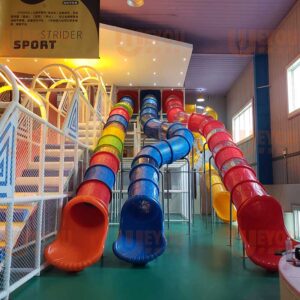
11.Is an indoor playground profitable?
Many investors ask the same important question: Is an indoor playground profitable?
The answer depends on several key factors, including location, operational strategy, compliance, and revenue diversification.
A well-located and well-managed community-based indoor playground with proper licensing and multiple income streams (such as memberships, birthday parties, and value-added services) can generate stable and attractive returns.
However, poor location selection, weak operations, relying only on ticket sales, or cutting costs on safety and hygiene often leads to low profit margins or even losses.
If your indoor playground exceeds the following estimated payback periods, it is generally considered a profitable business.
Estimated Payback Period by Playground Size
The payback period is not fixed. It varies significantly depending on whether your playground is located in a residential community or a shopping mall, as well as your operational efficiency.
Below are realistic industry-based estimates for three different playground sizes:
1. Small Indoor Playground (50㎡ / 538 ft²)
Total Investment: Approximately US$20,000
Monthly Performance Assumptions: Average daily visitors: ~20 children
Monthly revenue: US$6,000
Monthly Costs: Rent, utilities, cleaning supplies, miscellaneous expenses: US$1,500
Profit Scenarios:
Without employees (owner-operated):
Monthly net profit = $6,000 − $1,500 = $4,500
With 1 employee (approx. $500/month):
Monthly net profit = $4,500 − $500 = $4,000
Payback Period:
Owner-operated: $20,000 ÷ $4,500 ≈ 4.4 months
With employee: $20,000 ÷ $4,000 ≈ 5 months
2. Standard Indoor Playground (150㎡ / 1,615 ft²)
Total Investment: Approximately US$60,000
Monthly Performance Assumptions: Average daily visitors: ~40 children
Monthly revenue: US$12,000
Monthly Costs: Rent, utilities, consumables, miscellaneous expenses: $2,000
Profit Scenarios:
Without employees (owner-operated):
Monthly net profit = $12,000 − $2,000 = $10,000
With staff (manager + 2 attendants):
Monthly labor cost: $2,000
Monthly net profit = $10,000 − $2,000 = $8,000
Payback Period:
Owner-operated: $60,000 ÷ $10,000 = 6 months
With employees: $60,000 ÷ $8,000 ≈ 7.5 months
3. Large Indoor Playground (150㎡+ / 1,615+ ft²)
Total Investment: From approximately US$60,000+
Monthly Performance Assumptions: Average daily visitors: ~60 children
Monthly revenue: US$18,000
Monthly Costs:Rent, utilities, and operating expenses: $2,000+
Staffing costs (manager + 2 attendants): $2,000
Total Monthly Costs:$4,000
Monthly Profit:$18,000 − $4,000 = $14,000
Payback Period:
$60,000 ÷ $14,000 ≈ 4.2 months
Final Conclusion
Indoor playground profitability depends heavily on:
- Location quality (community vs. mall)
- Operational management
- Pricing strategy
- Membership and repeat customers
Additional revenue streams (birthday parties, events, workshops)
A well-operated community-based indoor playground with diversified income sources can achieve a relatively fast payback period and stable long-term cash flow.
However, businesses that rely only on ticket sales or operate in poorly selected locations may experience slow growth or financial losses.
In short, profitability is not determined by size alone, but by location and operation quality.
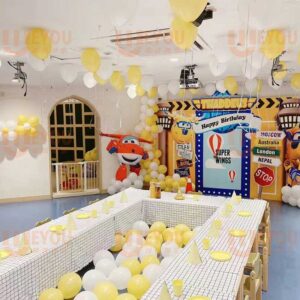
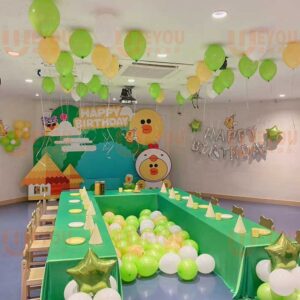
12.How Long Does It Take to Manufacture an Indoor Playground?
Once you place your order and pay the deposit, the manufacturer will schedule your project for production. However, production does not begin immediately.
Before manufacturing starts, the supplier will review all important project details with you to ensure everything is correct
Final Design Confirmation
Before production begins, the supplier will usually send you the following documents for final approval:
- 3D rendering of the playground
- AutoCAD layout drawing
- Engineering drawings
- Special production requirements (if applicable)
Carefully review every detail, including dimensions, colors, equipment selection, and layout.
Once these documents are approved, it is strongly recommended not to make further changes. Any modifications after approval may increase production costs or delay delivery, especially if manufacturing has already started.
How Long Does Production Take?
For most indoor playground projects, the total production lead time is approximately 7–15 days.
The exact production time depends on several factors, including the size of the project, design complexity, and the manufacturer’s production schedule.
Small Projects (Around 50㎡ / 538 ft²)
If your project is relatively small and the factory is not busy, production is typically completed in about 7 days.
Medium and Large Projects
For larger or more complex indoor playgrounds, or during peak production seasons, the lead time is usually 15–25 days.
Production Includes More Than Manufacturing
It’s important to understand that the 7–15-day lead time refers to the entire production process, not just the factory manufacturing stage.
After you place your order, the first step is to prepare the technical documentation.
The engineering team must convert the approved 3D design into detailed production drawings before manufacturing can begin.
Engineering Drawing Preparation
Typical preparation times are:
- Small projects: 1–2 days
- Large or complex projects: 3–5 days (or longer)
Only after these engineering drawings have been completed and approved will the factory begin manufacturing your playground equipment.
For example, if the total production lead time is 15 days, approximately 3–5 days may be spent preparing engineering drawings, while the remaining time is used for manufacturing, quality inspection, packaging, and shipment preparation.
Factors That May Affect Production Time
Several factors can influence the production schedule, including:
- Playground size
- Design complexity
- Level of customization
- Factory workload
- Peak production seasons
- Changes requested after production has started
To avoid delays, provide accurate site measurements, confirm all design details before production begins, and avoid last-minute modifications whenever possible.
Pro Tip
For investors planning an opening date, it’s best to allow extra time for production, international shipping, customs clearance, and installation. Although manufacturing typically takes only 7–15 days, the complete process from placing an order to opening your indoor playground usually takes several weeks, depending on your location and shipping method.
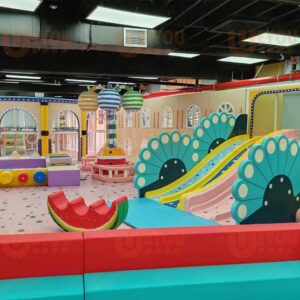
13. How long does it take to ship from China?
After the products are completed, the supplier will request the remaining balance payment. Once the balance is paid, shipment can be arranged.
You may either:
Arrange shipping through your own freight forwarder or ask the supplier to handle transportation for you
If you use your own freight forwarder, they will contact the supplier directly to coordinate the loading schedule and container arrangement.
How Long Does It Take to Import from China?
Many customers are eager to receive their goods as soon as they complete payment. However, the shipping time varies depending on the destination country and region.
Below is the approximate sea freight transit time for different regions (for reference only):
- Southeast Asia: 7–10 days
- South Asia: Around 15 days
- Oceania: Around 20 days
- Middle East: 15–25 days
- Mediterranean Region: 20–30 days
- Europe: 30–40 days
- East Africa: Around 25 days
- West Africa: Around 35 days
- West Coast of North America: 14–15 days
- East Coast of North America: 22–30 days
- Central America: 20–30 days
- South America: 30–35 days
14.How to install indoor playground?
Proper preparation before installation is essential to ensure a smooth, safe, and efficient installation process.
Before the installation team arrives or before you begin self-installation, the site should be completely cleaned and fully prepared.
1. Site Preparation
The installation area should be:
Clean and free of dust, debris, and construction waste.Fully accessible for workers and materials.Ready with completed renovation (flooring, lighting, etc.).Clearly marked according to the approved layout design.A well-prepared site helps avoid delays and ensures installation can proceed without interruption.
2. Required Installation Tools
Before installation begins, you should prepare basic tools such as:
- Electric wrench
- 20-meter extension power cord
- Electric drill (gun drill)
- Measuring tape
- Needle-nose pliers
- Scissors
- Pencil
- Open-end wrench (17–19 mm)
- L-shaped wrench
- Angle grinder
- Utility knife
- Gloves
- Phillips screwdriver bits
- Grinding discs
Having all tools ready in advance will significantly improve installation efficiency.
3. Installation Methods
The installation method depends mainly on the size and complexity of your playground.
Small Playground (Under 50㎡ / 538 ft²)
For small indoor playgrounds, self-installation is usually possible.
Manufacturers typically provide:
- Detailed installation drawings
- Step-by-step installation videos
- Technical guidance and remote support
With these materials, you can follow the instructions and complete installation step by step. If any issues arise during the process, you can contact the supplier for technical support and troubleshooting.
Medium Playground (50–150㎡ / 538–1,615 ft²)
For medium-sized playgrounds, you have two options:
- Self-installation (if you have basic technical skills)
- Professional installation service provided by the supplier
Both options are feasible depending on your budget and experience level.
Large Playground (Over 150㎡ / 1,615+ ft²)
For large and complex indoor playgrounds, professional installation is strongly recommended.
Experienced installation teams can
- Complete installation faster
- Ensure structural safety
- Reduce on-site errors
- Handle complex multi-level structures more efficiently
This helps ensure the project is completed on time and meets safety standards.
4. Self-Installation Guidelines
If your project is relatively small (around 50㎡), self-installation is a practical option.
In this case, the supplier will usually provide:
- Detailed installation drawings
- Installation videos
- Technical manuals
- Remote engineering support
You can follow the instructions step by step during installation. If you encounter any difficulties, you can contact the supplier for assistance and troubleshooting support.
However, this requires choosing a reliable and experienced manufacturer, as strong after-sales support is essential for successful self-installation.
Pro Tip
Even for self-installation projects, proper preparation is critical. A clean, well-organized site and complete tool preparation can significantly reduce installation time and prevent unnecessary delays.
15. How long does it take to install an indoor playground?
Many investors want to open their indoor playground as soon as possible after the equipment arrives, because the earlier the business opens, the sooner it can begin generating revenue.
So, how long does it usually take to install an indoor playground?
The answer depends on several factors, including the size of the playground, the number of play levels, the complexity of the design, and the size and experience of the installation team.
A small indoor playground with a simple layout may be completed within just a few days, while a large, multi-level playground with customized attractions can take several weeks or even up to a month to install.
Proper site preparation, accurate equipment placement, and an experienced installation team can significantly reduce installation time and help ensure a smooth project.
Factors That Affect Installation Time
The installation schedule is mainly influenced by:
- Playground size
- Number of play levels (two-level vs. three-level structures)
- Design complexity
- Number of attractions
- Experience and size of the installation team
- Site readiness before installation begins
If the venue has already been renovated and all utilities are in place before the equipment arrives, installation can usually proceed much more efficiently.
Estimated Installation Time
The following estimates are based on a standard installation team and normal site conditions
| Playground Size | Estimated Installation Time |
| Up to 50㎡ (538 ft²) | 5-7 days |
| 50–150㎡ (538–1,615 ft²) | 15–20 days |
| Over 150㎡ (1,615+ ft²) | > 20 days |
Larger playgrounds with more complex layouts or custom-themed attractions may require additional installation time.
How to Speed Up Installation
To keep your project on schedule, you should:
- Complete all renovation work before the equipment arrives
- Verify that all site measurements are accurate
- Ensure the installation area is clean and accessible
- Confirm the final design before production to avoid on-site modifications
- Work with an experienced installation team or follow the manufacturer’s installation instructions carefully
Good preparation can save several days of installation time and help prevent costly delays
Pro Tip
When planning your opening date, don’t base your schedule on installation time alone. Be sure to allow enough time for production, international shipping, customs clearance, site preparation, installation, final inspections, and staff training. Building a realistic timeline will help ensure a smooth opening and reduce the risk of unexpected delays.
16.How to operate an indoor playground?
Staff recruitment should ideally begin around 3 months before opening. This allows enough time for hiring, training, and preparing employees to handle daily operations and customer service effectively. Main Job Positions A typical indoor playground team includes the following roles:
- Store Manager
- Security / Safety Staff
- Cleaning Staff
- Cashier / Receptionist
Before opening, all employees should receive professional training, including safety procedures, customer service standards, and daily operational workflows.
How Many Staff Do You Need?
The required number of employees depends on the size of the playground, the complexity of the attractions, operating hours, and expected customer flow.
50–150㎡ Indoor Playground
A standard small-to-medium indoor playground typically requires:
2–3 staff members
150㎡+ Indoor Playground
A larger indoor playground usually requires:
3–4 full-time staff members
During weekends, holidays, or peak seasons, additional part-time staff may be needed, especially for safety supervision and crowd management.
Key Position: Store Manager / Cashier (1 Person)
The store manager is a critical role and should ideally be hired 3 months before opening. This person should participate in both operational preparation and pre-opening marketing activities.
Responsibilities include:
- Overseeing daily operations
- Managing staff schedules and supervision
- Handling customer service and complaints
- Participating in pre-opening marketing and promotions
- Monitoring revenue and overall business performance
The store manager plays a key role in ensuring smooth operations and maintaining service quality after opening
Safety Staff (Hire About 15 Days Before Opening)
The number of safety staff required depends on the size and layout of the indoor playground.
Main Responsibilities:
- Supervise children during play
- Ensure all customers follow safety rules
- Prevent or stop unsafe behavior from children and parents
- Respond quickly to accidents or emergency situations
- Maintain overall safety in the play area
During weekends, holidays, and peak hours, additional safety staff may be required to ensure proper supervision and crowd control.
Cleaning Staff (Hire About 15 Days Before Opening)
Cleaning staff play a key role in maintaining hygiene and ensuring a safe environment for children. Main Responsibilities:
- Daily cleaning and disinfection of all play areas
- Regular cleaning of public spaces and high-touch surfaces
- Checking and maintaining fire safety equipment
- Ensuring all play structures remain clean and safe
- Maintaining a hygienic environment for children and families
Pro Tip
Both safety staff and cleaning staff should receive proper training before the grand opening. Well-trained staff not only improve customer experience but also help reduce operational risks and ensure compliance with safety standards.
17.How to market an indoor playground effectively
Marketing is one of the most critical factors for successfully operating an indoor playground. Even if your facility has high-quality equipment and a great location, it will still struggle to attract customers without effective promotion.
Successful indoor playground businesses typically combine online and offline marketing strategies to increase brand awareness, attract new customers, and improve customer retention.
Online Marketing Advantages:
- Large user base
- Wide audience coverage
- Fast communication and content sharing
- Easy to build brand awareness
Disadvantages:
- Advertising costs can be high
- Strong competition on social media platforms
Online marketing allows indoor playgrounds to quickly reach local families, schools, teenagers, and young parents. High-quality videos and attractive photos can easily capture attention and encourage potential customers to visit your facility.
Social Media Platforms
Facebook
Facebook remains one of the most popular social media platforms worldwide. Creating a professional business page for your indoor playground allows you to connect with customers, share promotions, post photos of visitors, and engage with your local community.
X (Twitter)
X is suitable for sharing quick updates such as news, announcements, promotions, holiday events, and real-time information about your indoor playground.
YouTube
YouTube is the world’s second-largest search engine. Regularly uploading videos of playground tours, customer experiences, and birthday parties can significantly increase visibility and attract more potential customers.
Instagram
Instagram is one of the most popular visual platforms today. High-quality photos and short videos can effectively showcase your attractions, facility atmosphere, and customer experiences.
TikTok
TikTok is highly effective for indoor playground marketing because fun moments and children’s laughter are naturally engaging and highly shareable. Posting entertaining short videos and customer highlights can quickly boost exposure and attract a younger audience.
Pro Tip
A successful indoor playground marketing strategy should focus on consistent content creation, especially real customer experiences such as birthday parties, weekend crowds, and interactive play activities. Authentic content performs far better than purely promotional advertisements.
Offline Marketing
Advantages:
- Lower promotional costs
- More targeted local customer reach
- Stronger face-to-face customer engagement
Disadvantages:
- Limited geographic coverage
- Traditional advertising may feel intrusive to some audiences
- Some offline promotional activities can still be relatively costly
Offline marketing is especially important for indoor playground businesses because your target customers are typically local families living nearby. Local promotion helps build trust and significantly increases repeat customer rates.
Mobile Advertising
Use advertising vehicles, banners, and local signage near schools, shopping malls, residential communities, and busy streets to increase local visibility and brand exposure.
School and Educational Partnerships
Cooperating with schools, kindergartens, training centers, and other educational institutions is one of the most effective ways to attract stable group customers. You can offer:
- School group activities
- Student discounts
- Graduation parties
- Sports events
- Educational field trips
This type of partnership helps generate consistent group bookings and stable revenue.
Community Marketing
Participating in local community events and family festivals is another effective strategy. Offering free trial tickets or small interactive games can attract both parents and children and encourage them to visit your indoor playground.
Birthday Parties and Membership Programs
Birthday parties and membership systems are essential for increasing repeat customers and long-term revenue.
Well-designed party packages and membership discounts can significantly improve customer loyalty and encourage repeat visits, which is critical for the long-term success of an indoor playground business.
18. How to maintain your indoor playground equipment
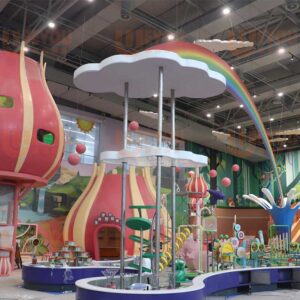
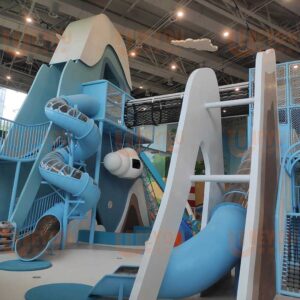
Proper maintenance is critical to the safety and longevity of your soft play equipment. We recommend the following maintenance tips to keep your equipment in good condition:
- Establish a maintenance routine. Create a schedule of regular inspections and cleaning to ensure that your soft play equipment is in good condition
- Follow the manufacturer’s instructions for cleaning and maintenance of your soft play equipment
- Inspect all connections, joints, and fittings regularly to ensure they are secure and not damaged
- Check all padding, netting, and materials regularly for wear and tear. Replace any damaged or worn pieces immediately
- Clean the soft play equipment regularly using soap and water. Disinfect the equipment at least once a week using an approved disinfectant
- Store the equipment in a dry, cool, and well-ventilated area to prevent mold and mildew growth
Daily Safety Inspections and Cleaning
Performing daily safety inspections and cleaning is essential to catch any potential hazards before they cause harm to children. We recommend the following daily tasks:
- Inspect the soft play area for any debris, loose padding, or damaged equipment
- Check that all connections, joints, and fittings are secure
- Inspect the netting and padding for any wear and tear
- Clean the soft play equipment using soap and water to remove any dirt or grime
Weekly Safety Inspections and Cleaning
Performing weekly safety inspections and cleaning helps to ensure the long-term safety and durability of your soft play equipment. We recommend the following weekly tasks:
- Check all bolts, screws, and fittings to ensure they are tight and properly secured
- Inspect all netting, padding, and materials for any signs of wear and tear. Replace any damaged or worn pieces
- Clean and disinfect the entire soft play area using an approved disinfectant.
- Inspect all equipment for signs of wear and tear, including signs of rust or corrosion