Zip-line equipment is becoming increasingly popular in modern playgrounds, offering children a thrilling yet safe play experience. Children are naturally drawn to the thrill of gliding, and the relatively low height and user-friendly design of zip-lines mean that no safety harnesses are required, making them convenient and easy to use.
The zip line operates by utilizing the rider’s body weight and gravity to glide smoothly from a higher elevation to a lower one. A pulley system mounted on high-tensile steel cables ensures fast and stable movement, typically reaching speeds of 20–30 km/h, with the exact speed depending on the slope. The steeper the slope, the higher the speed, resulting in a dynamic and thrilling experience.
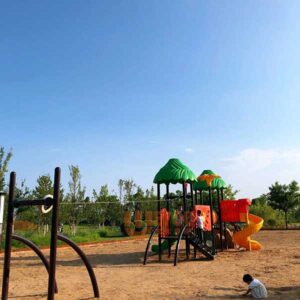
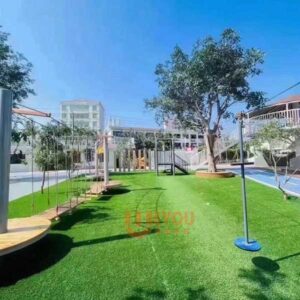
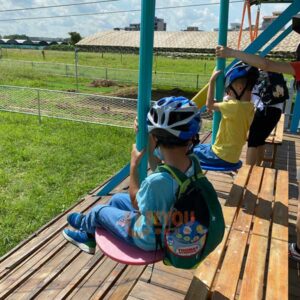
To ensure maximum safety, the end of the zip line is equipped with a spring-loaded braking system or an automatic braking system, enabling a smooth and controlled stop. Some models also feature an automatic return mechanism that sends the cart back to the starting point, thereby improving operational efficiency and the user experience.
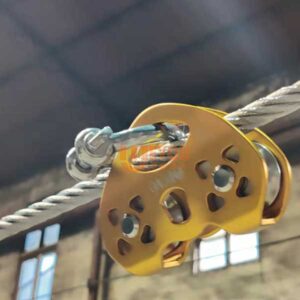
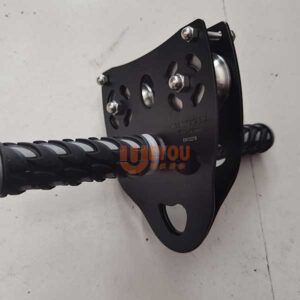
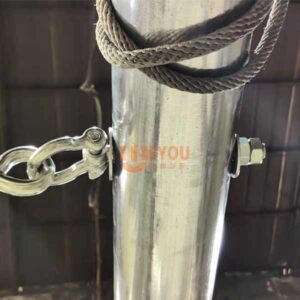
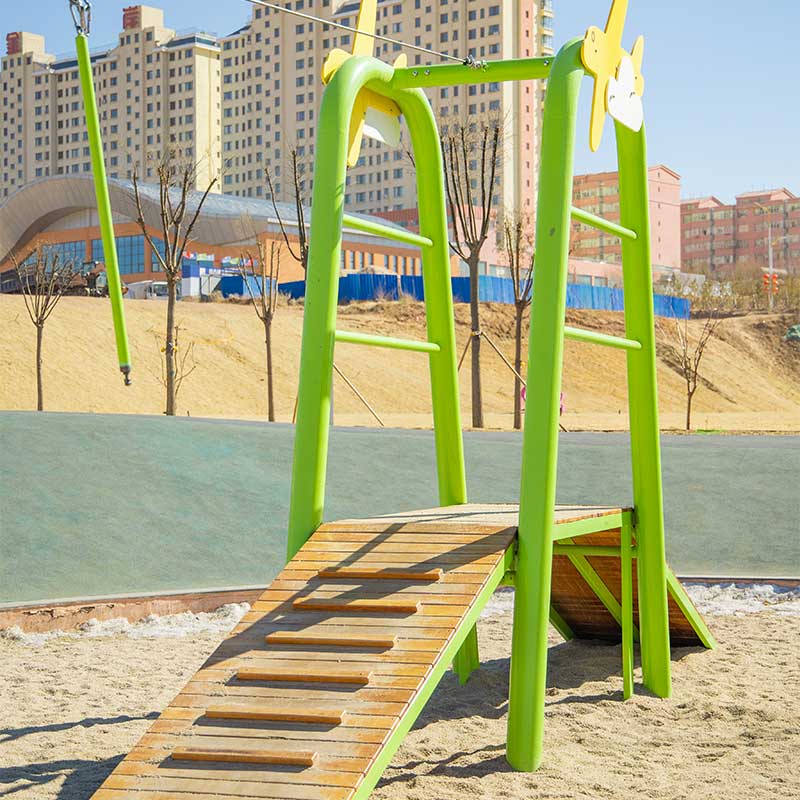
The journey begins at the zip line platform, the starting point of this aerial adventure. These platforms are carefully designed to provide a safe launch area while offering users a spectacular view before takeoff. Safety is always the top priority. Modern zip line systems utilize advanced braking technology to ensure a safe and stable landing every time. This makes zip line attractions the perfect blend of excitement, safety, and convenience, suitable for users of all ages. We offer zip line solutions of various lengths and levels of complexity to meet the needs of different recreational settings, including parks, schools, and commercial leisure areas. Our zip line systems feature robust, durable structures built to withstand frequent use, ensuring long-lasting performance and reliable quality so that children can enjoy endless fun for years to come.
Safety & Certifications
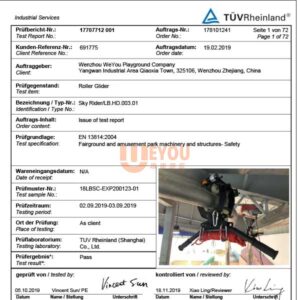
Our zip line system is designed in accordance with EN 1176 and ASTM F1487 standards to ensure the highest level of safety for use in playgrounds. It features a reliable braking system, anti-pinch design, and a sturdy, durable steel cable structure. The system is designed to provide children with a safe, smooth, and enjoyable riding experience.
The height of the zip line starting platform must be adjustable and suitable for children. There must be no risk of collision along the entire route (maintaining a safe distance from posts, guardrails, and the ground). The path must be continuous and smooth, with no jamming or abrupt changes. The slope must be calculated and verified to avoid excessive terminal velocity; while speed is directly proportional to slope, it must be compatible with the braking system.
Common braking system solutions include spring brakes, rubber brakes, or gravity-assisted deceleration (via a slight uphill slope at the end). Deceleration must be smooth to prevent bouncing, avoid secondary injuries, and ensure a safe stop.
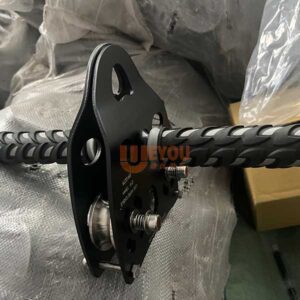
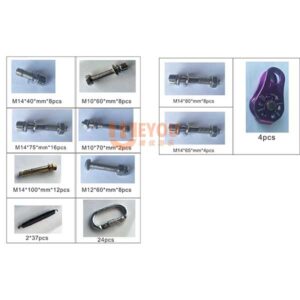
Our handles and seats are non-slip and ergonomically designed, with no sharp edges or burrs, allowing children to grip or sit securely naturally without the need for safety harnesses.
The depth of the sand layer depends on the equipment’s critical fall height. According to the EN 1176 standard, a minimum depth of 200–400 mm is recommended. In practice, an additional 100 mm is typically added to compensate for displacement and compaction of the sand layer during use.
Installation & Maintenance
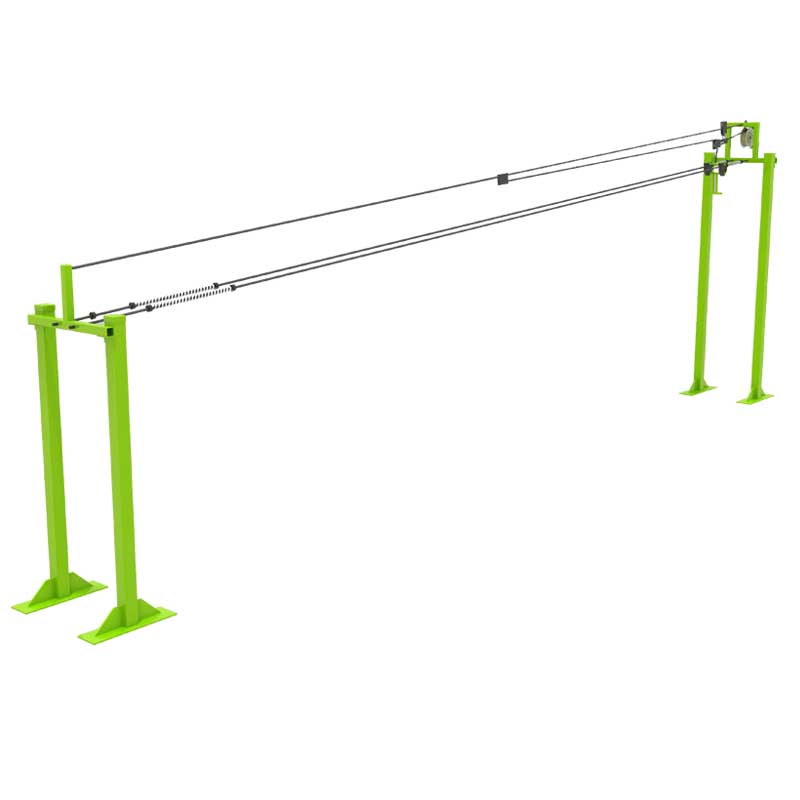
Depending on project requirements, the zip line can be installed either in-ground or above-ground. For commercial playgrounds, we recommend an in-ground installation with a concrete foundation to ensure maximum stability and compliance with the EN 1176 standard. The structure can be configured as an A-frame or cantilevered design, and the layout can be customized to suit site conditions.
A-frame or Portal Frame: one set of columns at each end (A-frame or gate-frame style), with steel cables spanning the middle. This design offers high stability, standardized installation, and is easy to pass inspection. Suitable for parks, schools, and residential communities. Cantilever design: features a cantilever structure on one or both sides. Requires fewer posts, offers a cleaner aesthetic, saves space, and has a strong design appeal. However, it demands higher structural strength and incurs higher costs. Suitable for high-end or landscape projects.
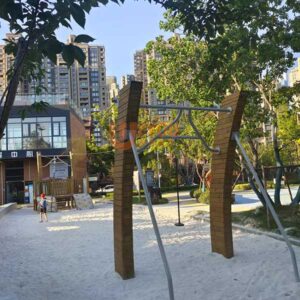
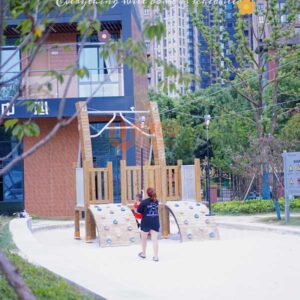
If classified by foundation method: In-ground Installation (recommended): posts are buried underground and secured with concrete. This method is the most stable, offers a long service life, complies with EN 1176 standards, and is suitable for engineering projects (Highly Recommended)
Surface Mount or Anchor Bolt: Installation involves securing the post via a flange at the base using expansion bolts. Advantages include quick installation and removability; disadvantages include slightly lower stability. Suitable for temporary projects or commercial events
Cable tension must be adjusted—neither too loose nor too tight. The slope is generally controlled between 3% and 6%, as this determines speed and safety. Additionally, safety zones must be maintained on both sides and at the endpoints.
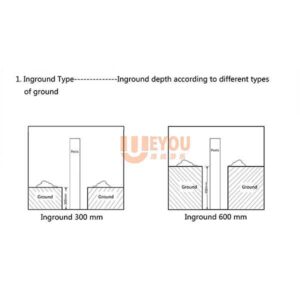
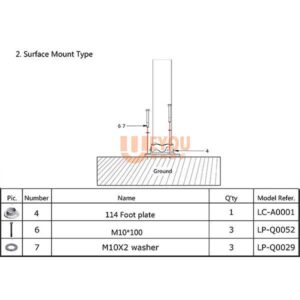
With our extensive project experience, we provide detailed installation drawings, basic layouts, and professional technical guidance to ensure a smooth and reliable installation process.
FAQ
1.Which Age Groups Are Ziplines Suitable For?
playground ziplines are typically designed for children ages 3 and up. With a variety of lengths and difficulty levels available, they can be adapted to suit children of different ages.
2.How Are Ziplines Installed and Maintained?
To ensure safety, installation must always be carried out by a professional team. Regular maintenance includes checking cable tension, verifying component strength, and ensuring all connections are secure and reliable. With proper installation and continuous maintenance, the zipline system will remain safe and durable.
3.What Materials Are Ziplines Made Of?
This zip line is constructed using durable steel cables and a sturdy metal frame. All materials have been carefully selected to ensure they can withstand various outdoor weather conditions and UV exposure. The pulleys and seats feature ergonomic designs and meet safety standards to ensure safe use.
4.How long does production take?
The production lead time is around 7–15 days after drawing confirmation and deposit received, depending on the order quantity and customization requirements.
5.What is the maximum weight/capacity?
The standard zip line has a weight capacity of 80–120 kg per user. Its structure and cable design comply with the EN 1176 standard and are capable of safely handling dynamic loads. Only one person may use it at a time.